
Chewing & Swallowing Difficulty in Old Age (dental insufficiency)
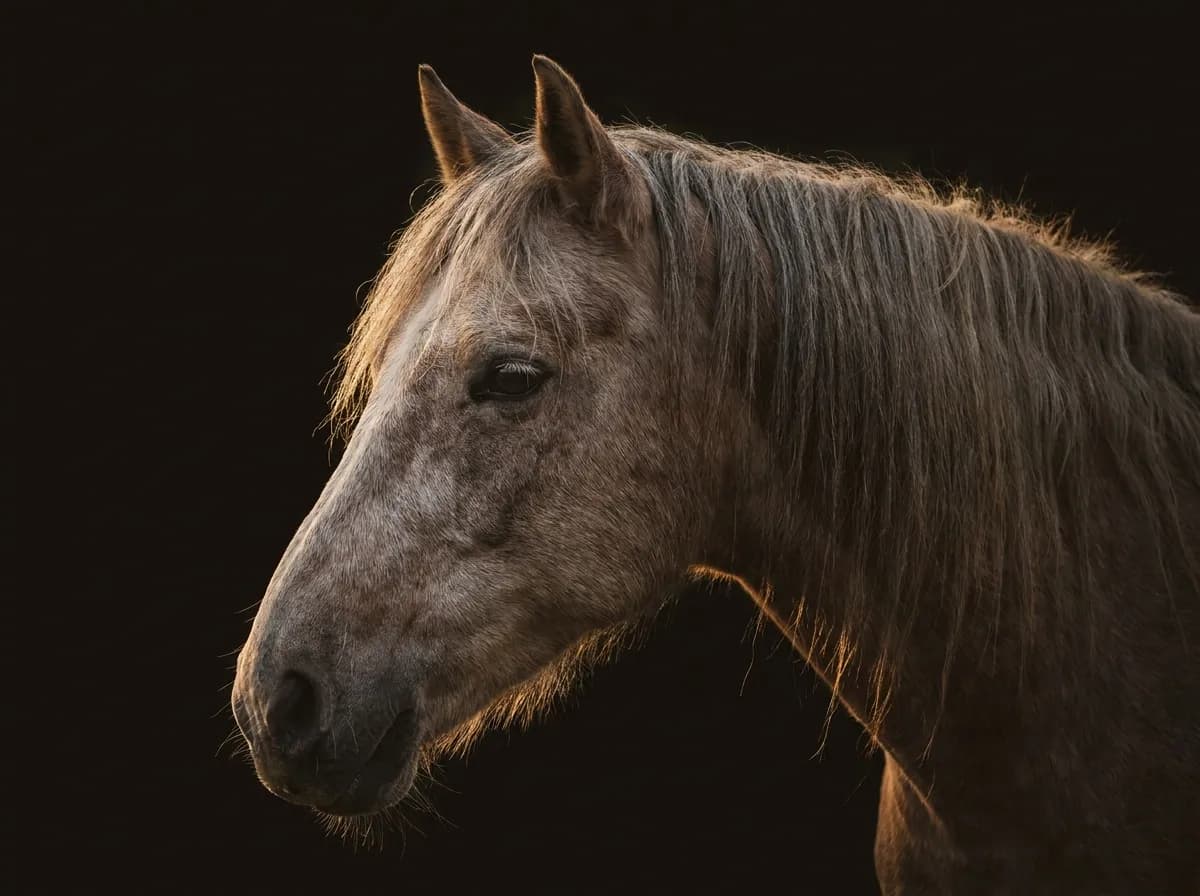
In the old horse, the lifelong erupting teeth eventually wear down, leaving gaps, loose teeth or missing cheek teeth (dental insufficiency). The horse can no longer chew its roughage sufficiently — it forms feed wads and drops them (quidding), the risk of choke rises and it slowly loses weight. With adapted feed management, many of these horses remain well supplied.
Veterinary care required
This condition belongs in veterinary diagnosis and treatment. Compounds are at most supportive.
Priority · vet & management
First the veterinary/dental examination — it clarifies which teeth bear, which are painful or missing. On this basis feed management is central: soaked hay/meadow cobs, senior mash and well-chopped or soaked feed instead of long, hard stalks, in several portions and with enough water. Complementary feeds are only adjunctive.
Possible causes
- · age-related tooth wear up to the using-up of the cheek teeth
- · tooth loss, gaps (diastemata) and loose teeth
- · painful dental diseases such as EOTRH or sharp edges
- · hasty gulping of poorly chewed feed as a choke risk
Supportive compounds · supplementary feed, not medication
Linseed
AMGFEI freeenergy-dense, well-digestible omega-3 source for the senior ration
Compound profile →Marshmallow
AMGFEI freemucilage, traditionally to moisten/protect the mucous membranes when eating
Compound profile →Brewer's yeast
AMGFEI freeB-vitamins, traditionally to support condition and feed intake
Compound profile →Prevention
Regular dental checks in the senior and a timely switch to easily soakable feed prevent quidding, choke and emaciation before the general condition suffers.
Equiterna's take
Equiterna sees senior chewing weakness as a bridge between mouth and the whole horse: first the dental check, then the suitable, soaked feed. This way even horses with few cheek teeth remain dignifiedly provided for.
Usage note
This content is for information and education. It does not replace veterinary diagnosis or treatment. If your horse shows signs of illness, consult a veterinarian.
Equiterna is an intermediary platform for equine knowledge, marketplace and tools — not a veterinary-medicines dealer, veterinary practice or pharmacy. Compound information is study-attributed and free of healing claims. Legal framework: Regulation (EU) 2019/6 / TAMG (DE/AT), Feed Regulation (EC) 767/2009, FEI Prohibited Substances List, HWG.