

Navicular Syndrome (Podotrochlosis)
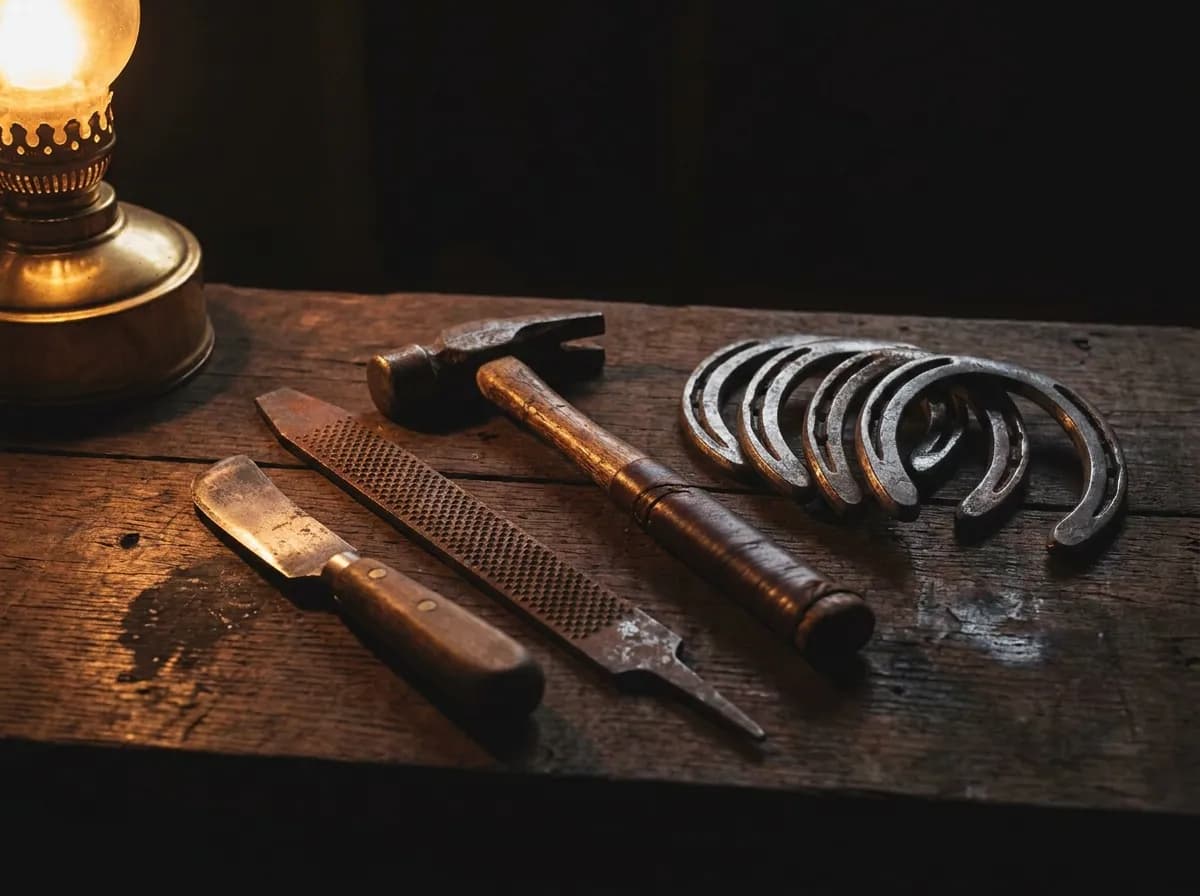
Podotrochlosis is a chronic complex of changes to the navicular bone, bursa and deep flexor tendon in the navicular region, often leading to a shifting forelimb lameness. The causes are considered multifactorial (e.g. load, hoof shape, biomechanics); the syndrome is usually not curable but can often be managed for a long time.
Veterinary care required
This condition belongs in veterinary diagnosis and treatment. Compounds are at most supportive.
Priority · vet & management
Diagnosis (lameness exam, nerve blocks, radiography/MRI) and therapy belong in veterinary hands; the greatest lever is consistent, orthopaedically considered hoof care/shoeing by the farrier in a team with the vet. Compounds are only adjunctive.
Possible causes
- · chronic strain on the navicular structures
- · unfavourable hoof shape and underrun heels
- · conformation and biomechanical factors
- · hard ground and one-sided loading
Supportive compounds · supplementary feed, not medication
Green-lipped mussel
AMGFEI freeprovides GAG and omega-3 (ETA); discussed in the context of movement comfort
Compound profile →MSM
AMGFEI freeorganic sulphur source, discussed as antioxidant (adjunctive)
Compound profile →Linseed
AMGFEI freeomega-3 (ALA) for the inflammatory balance
Compound profile →Biotin
AMGFEI freeB-vitamin for more stable hoof horn as a basis for good hoof care (long-term)
Compound profile →Rosehip
AMGFEI freeantioxidant polyphenols (general movement comfort, adjunctive)
Compound profile →Devil's claw
AMGFEI withdrawaltraditionally used for movement topics — FEI: doping-relevant, prohibited in competition
Compound profile →Prevention
Early, correct hoof trimming with a balanced heel/toe shape, suitable ground and balanced loading can relieve the navicular structures.
Equiterna's take
In navicular syndrome Equiterna places orthopaedic hoof trimming within the vet-farrier team at the centre — compounds only accompany long-term movement comfort.
Usage note
This content is for information and education. It does not replace veterinary diagnosis or treatment. If your horse shows signs of illness, consult a veterinarian.
Equiterna is an intermediary platform for equine knowledge, marketplace and tools — not a veterinary-medicines dealer, veterinary practice or pharmacy. Compound information is study-attributed and free of healing claims. Legal framework: Regulation (EU) 2019/6 / TAMG (DE/AT), Feed Regulation (EC) 767/2009, FEI Prohibited Substances List, HWG.