
Vitamin E in winter — why the hay ration is not enough
Preserved forage loses alpha-tocopherol. A look at supply gaps and the body of evidence.
Equiterna Redaktion
Equine nutritionist · NRC / GfE
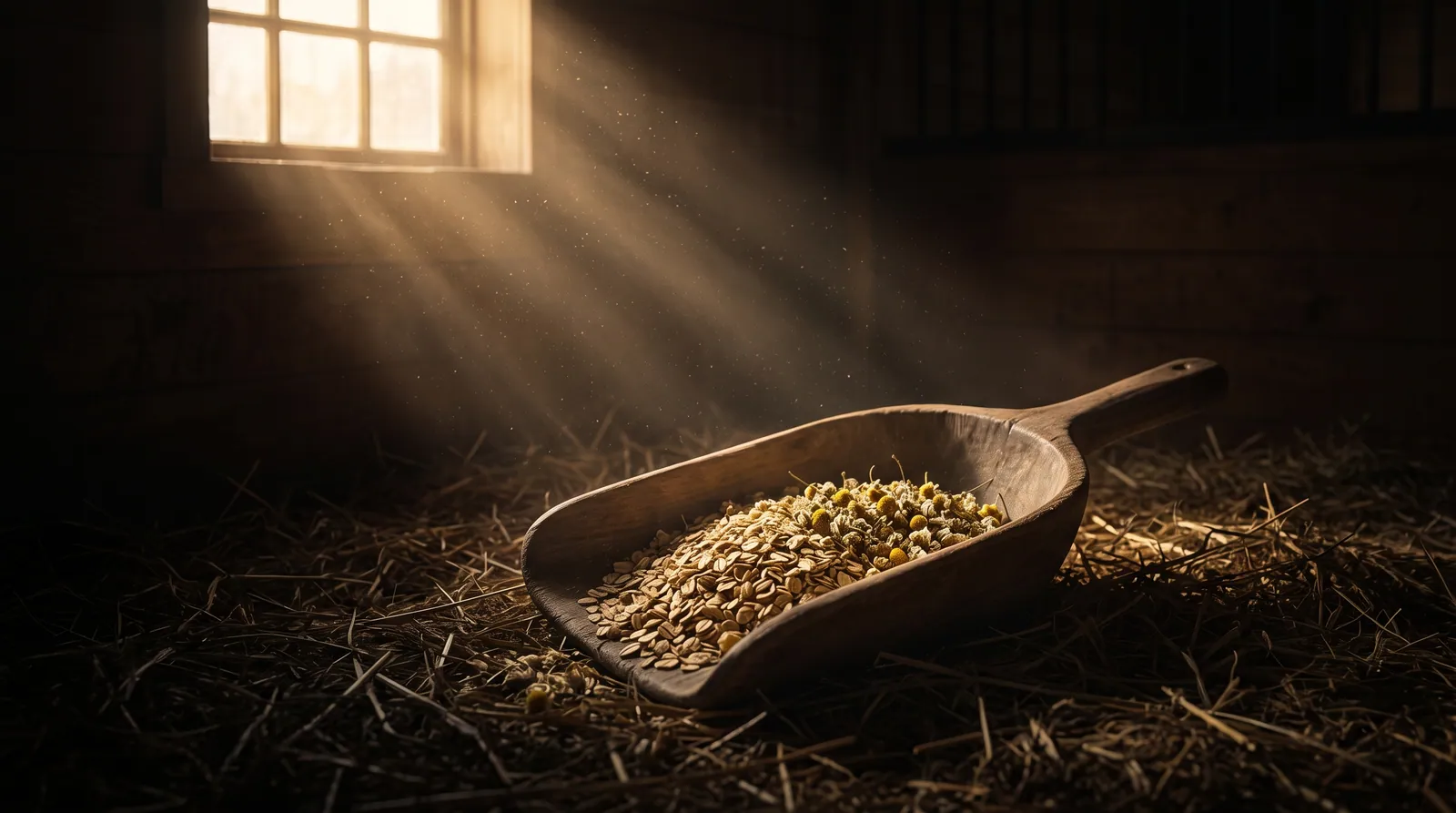
As soon as the grazing season ends, the horse's vitamin E supply changes more fundamentally than many realise. Fresh pasture grass is by far the richest natural source of alpha-tocopherol — and it is precisely this content that collapses during preservation.
Hay loses a considerable part of its vitamin E content through drying and storage. A horse that eats nothing but hay over the winter therefore quickly ends up at the lower edge of supply — without any visible signal.
Why alpha-tocopherol is so fragile
Vitamin E is the most important fat-soluble antioxidant in the body and protects muscle and nerve cell membranes from lipid peroxidation. It is not stored to any notable extent — the supply must be covered continuously through the ration.
“A deficiency rarely announces itself. It only shows once the reserve has long been used up.”
The connection to selenium
Vitamin E works closely with selenium in the antioxidant system. Especially in the selenium-poor soils of Central Europe, a tight selenium supply amplifies the consequences of a vitamin E gap. Both values should be considered together — ideally via a blood level check.
Practice: horses without pasture access over the winter months often benefit from a targeted vitamin E supplementation. The individual dosing belongs in veterinary hands — selenosis is real.
Anyone who knows the ration can close the gap before it becomes clinical. That is the real lever: not to treat, but to supply in good time.
Sources
Compounds in this article
Usage note
This content is for information and education. It does not replace veterinary diagnosis or treatment. If your horse shows signs of illness, consult a veterinarian.
Keep reading
Summer eczema — why the skin is rarely where it starts
The reaction to the midge bite is the visible part. What lies beneath it decides the course.
HealthGrowing old without looking old — what really counts in the senior
Many complaints that pass for age-related are not. A look at what can be influenced.
HealthWhen the coat whispers — what the coat change reveals about the metabolism
Twice a year the horse rebuilds its entire coat. What happens in the metabolism while it does — and which signs can be read.