

Omega-3 in the horse — linseed oil, algae oil or salmon oil?
Plant and marine sources supply different fatty acids. Why the choice of source decides more than the sheer amount.
Equiterna Redaktion
Equine nutritionist · NRC / GfE
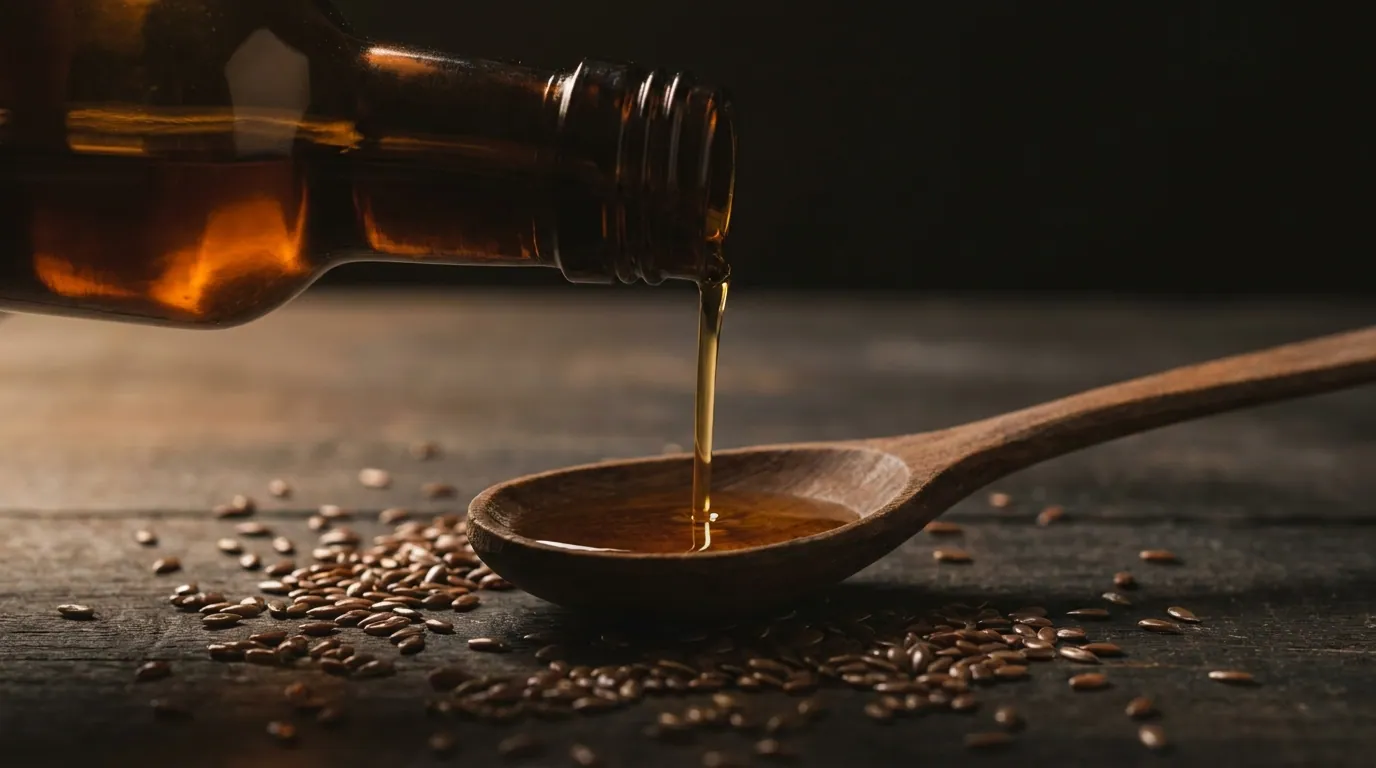
Omega-3 is on many labels — rarely does it say which omega-3 is meant. That is exactly the point: the fatty acid group comprises several molecules with different biological reach. Plant oils supply almost exclusively alpha-linolenic acid (ALA), marine sources by contrast directly the long-chain EPA and DHA.
Conversion is the bottleneck
ALA is theoretically regarded as a precursor of EPA and DHA — the body can convert it. In the horse, however, this conversion is limited. In a feeding study at the University of Florida, an ALA-rich ration did not measurably raise the EPA and DHA levels in blood and plasma. So whoever aims at the long-chain fatty acids only gets there to a limited extent with linseed oil alone.
Linseed and linseed oil nevertheless remain sensible: they are the cheapest and most everyday-suitable source for shifting the fatty acid profile of the overall ration towards omega-3. Algae oil supplies DHA from a plant-based, marine origin and is thus the vegetarian option for the long-chain fatty acids; salmon oil brings EPA and DHA along, but is a fish product — taste acceptance and sustainability belong in the consideration.
The ratio of omega-6 to omega-3
Fresh pasture grass is by nature omega-3-focused. Grain- and oilseed-rich concentrate feeds, by contrast, shift the ratio towards omega-6. Since both groups compete for the same metabolic pathways, it is less about an absolute omega-3 amount than about a balanced ratio across the overall ration. Whoever feeds a lot of concentrate has the larger lever here than whoever adds a dash of oil.
“Not every omega-3 source ends up where you want it. In the horse the form of the fatty acid decides, not just the number on the label.”
Omega-3 fatty acids are discussed above all in connection with skin and coat appearance and with the modulation of inflammatory processes — fields in which marine EPA/DHA were most likely to show measurable changes in studies. They are also used for nutritional support alongside summer eczema burden. This is feeding-based support via supplementary feed, no substitute for therapy: an existing skin condition belongs in veterinary assessment.
Practice: if it is about skin appearance or inflammation modulation, marine sources (algae oil, salmon oil) are usually superior to the plant-based ones because they supply EPA and DHA directly. If it is about a favourable overall fatty acid ratio, linseed oil does good service. The dose should fit the ration and be built up gradually.
The most honest recommendation is therefore: first clarify the goal, then choose the source. Omega-3 is not the same as omega-3 — and in the horse this distinction is no hair-splitting, but the core of the effect.
Sources
Compounds in this article
Usage note
This content is for information and education. It does not replace veterinary diagnosis or treatment. If your horse shows signs of illness, consult a veterinarian.
Keep reading
Summer eczema — why the skin is rarely where it starts
The reaction to the midge bite is the visible part. What lies beneath it decides the course.
HealthGrowing old without looking old — what really counts in the senior
Many complaints that pass for age-related are not. A look at what can be influenced.
HealthWhen the coat whispers — what the coat change reveals about the metabolism
Twice a year the horse rebuilds its entire coat. What happens in the metabolism while it does — and which signs can be read.