Eyes
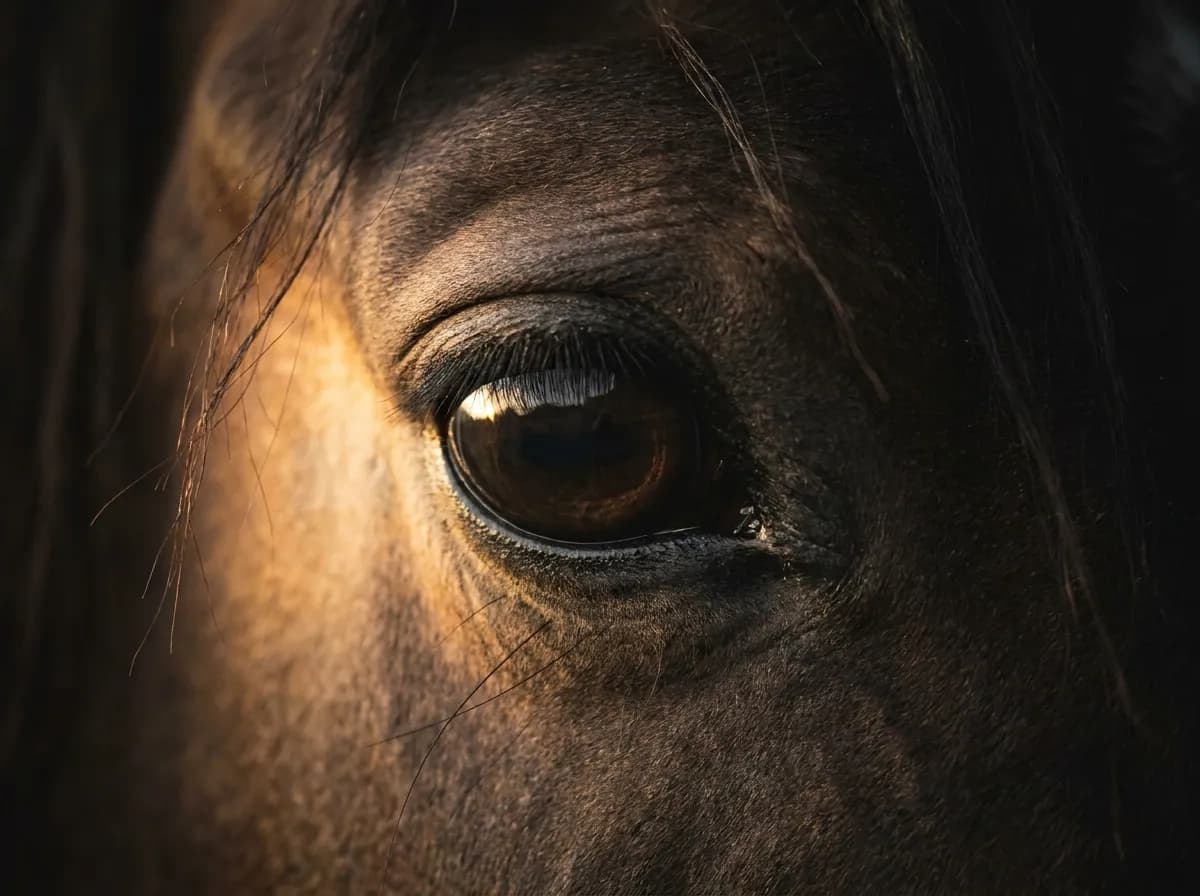
Watering, half-closed or swollen eyes — many eye problems are emergencies.
When to call the vet
A squinting, painful, cloudy or injured eye is an EMERGENCY — see a vet immediately.
Conditions with a detail page
Equine Recurrent Uveitis (ERU / Moon Blindness / Periodic Ophthalmia)
highA recurrent, immune-mediated inflammation of the inner eye membrane (uvea) and the most common cause of blindness in horses. A role of Leptospira antigens and a genetic predisposition (e.g. Appaloosa, warmbloods) are discussed; every acute flare can further damage the eye.
Corneal Ulcer
emergencyA defect of the corneal surface that can range from superficial to deep into the corneal tissue. An ulcer is painful and sight-threatening: bacterial or enzymatic processes can worsen a 'melting' ulcer within hours to a few days, up to perforation of the eye.
Conjunctivitis
mediumInflammation of the conjunctiva, the moist tissue around the eye and inner lid. It is common but should not be dismissed as harmless too quickly: veterinary clarification is important to reliably distinguish more serious causes (e.g. corneal ulcer, uveitis, foreign body, tear-duct problem).
Cataract
lowA clouding of the lens that restricts vision depending on its extent. Cataracts can be congenital, age-related or a consequence of other eye diseases (e.g. recurrent uveitis) and often run a chronic course.
Ocular Squamous Cell Carcinoma (SCC)
mediumSquamous cell carcinoma is the most common tumour of the horse's eye and mainly affects the lids, conjunctiva and the cornea-conjunctiva border. It is promoted by UV radiation and unpigmented (pink) lid margins — early clarification of suspicious changes is important.
Acute Eye Injury / Foreign Body (Trauma)
emergencyBlunt or sharp injuries and foreign bodies on the eye are painful and can acutely threaten vision. Even seemingly small injuries can reach deeper than visible and cause secondary damage (e.g. corneal ulcer, internal eye inflammation).
MCOA (Multiple Congenital Ocular Anomalies, PMEL17 / Silver)
mediumCongenital malformations of the anterior eye segment, closely linked to the silver variant of the PMEL17 gene — that is, to the colour for which breeds such as the Rocky Mountain Horse are known. Heterozygous silver carriers usually show only iris cysts of no clinical significance, homozygous animals clear malformations up to visual impairment. The condition is congenital and non-progressive.
CSNB (Congenital Stationary Night Blindness, TRPM1)
lowCongenital impairment of vision in low light, linked to the leopard complex (LP) in the TRPM1 gene. Only homozygous animals (LP/LP) are affected — that is, those with the strongest leopard spotting. The impairment is congenital, stays the same lifelong and does not progress. In daylight affected horses see normally.
More topics in this category
Taxonomy — detail pages follow step by step (sourced).
Equiterna logic
Eye problems carry a high urgency filter. Many of them are veterinary emergencies.
Usage note
This content is for information and education. It does not replace veterinary diagnosis or treatment. If your horse shows signs of illness, consult a veterinarian.
Equiterna is an intermediary platform for equine knowledge, marketplace and tools — not a veterinary-medicines dealer, veterinary practice or pharmacy. Compound information is study-attributed and free of healing claims. Legal framework: Regulation (EU) 2019/6 / TAMG (DE/AT), Feed Regulation (EC) 767/2009, FEI Prohibited Substances List, HWG.