CSNB (Congenital Stationary Night Blindness, TRPM1)
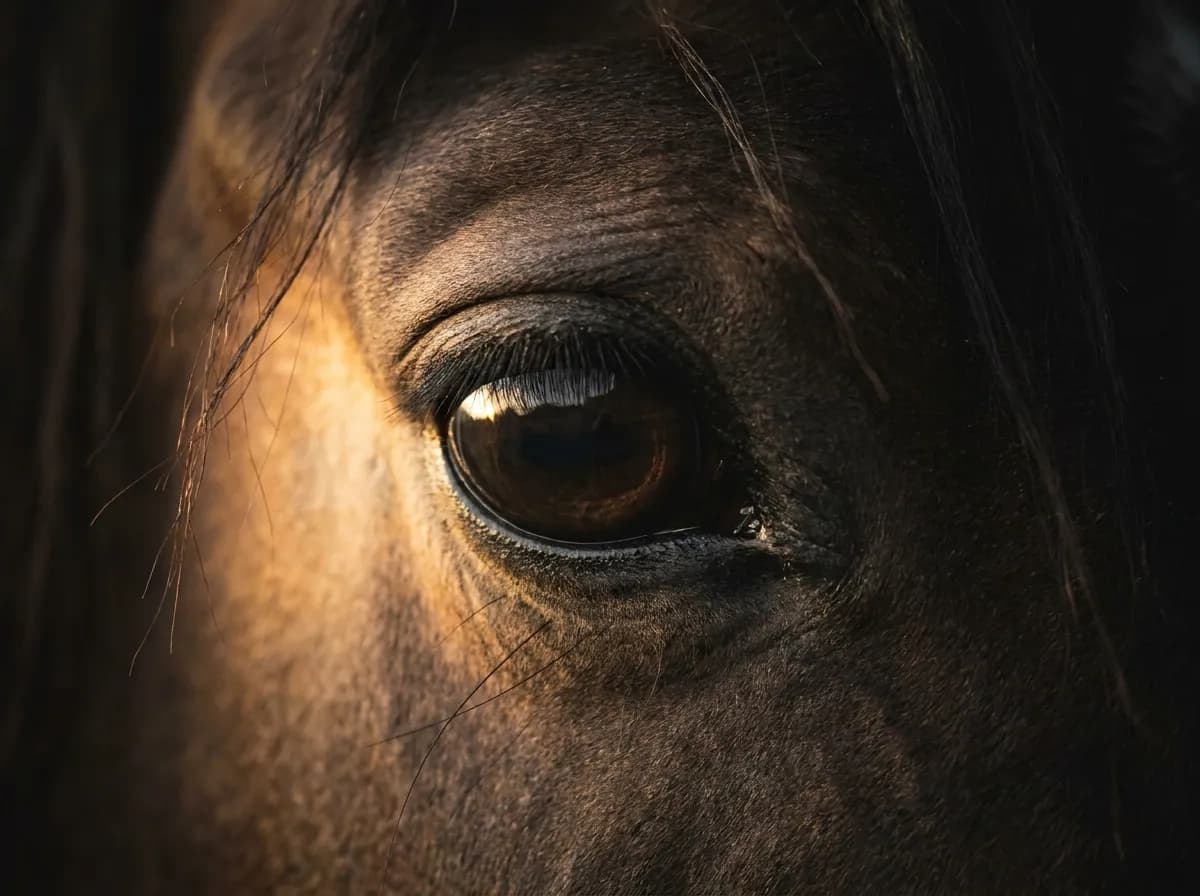
Congenital impairment of vision in low light, linked to the leopard complex (LP) in the TRPM1 gene. Only homozygous animals (LP/LP) are affected — that is, those with the strongest leopard spotting. The impairment is congenital, stays the same lifelong and does not progress. In daylight affected horses see normally.
Veterinary care required
This condition belongs in veterinary diagnosis and treatment. Compounds are at most supportive.
Priority · vet & management
There is no treatment and none is needed — the impairment is stable. What matters is knowing about it: lighting in the stable, calm loading, no night-time demands in unfamiliar terrain. An ophthalmic work-up distinguishes CSNB from progressive diseases.
Possible causes
- · homozygosity for the TRPM1 insertion (LP/LP)
- · the same variant produces the leopard complex spotting
- · described in Appaloosa, Knabstrupper, leopard-spotted Noriker and other LP breeds
Supportive compounds · supplementary feed, not medication
Prevention
Plannable via the LP genotype. LP/lp animals show the spotting without night blindness — mating two LP carriers produces LP/LP offspring.
Equiterna's take
Equiterna describes CSNB expressly as a characteristic, not a disease: it is congenital, unchanging and easy to accommodate day to day. Whoever knows about it keeps the horse differently — whoever does not, thinks it is spooky.
Usage note
This content is for information and education. It does not replace veterinary diagnosis or treatment. If your horse shows signs of illness, consult a veterinarian.
Equiterna is an intermediary platform for equine knowledge, marketplace and tools — not a veterinary-medicines dealer, veterinary practice or pharmacy. Compound information is study-attributed and free of healing claims. Legal framework: Regulation (EU) 2019/6 / TAMG (DE/AT), Feed Regulation (EC) 767/2009, FEI Prohibited Substances List, HWG.