The old horse — management for good years
From about 18 to 20 years on the priorities shift: weight and teeth need more attention, the feeding follows the chewing ability, and the watchfulness for age-related metabolic changes rises. A guide for quality of life instead of repair.
Equiterna Redaktion
Veterinarian · Prevention
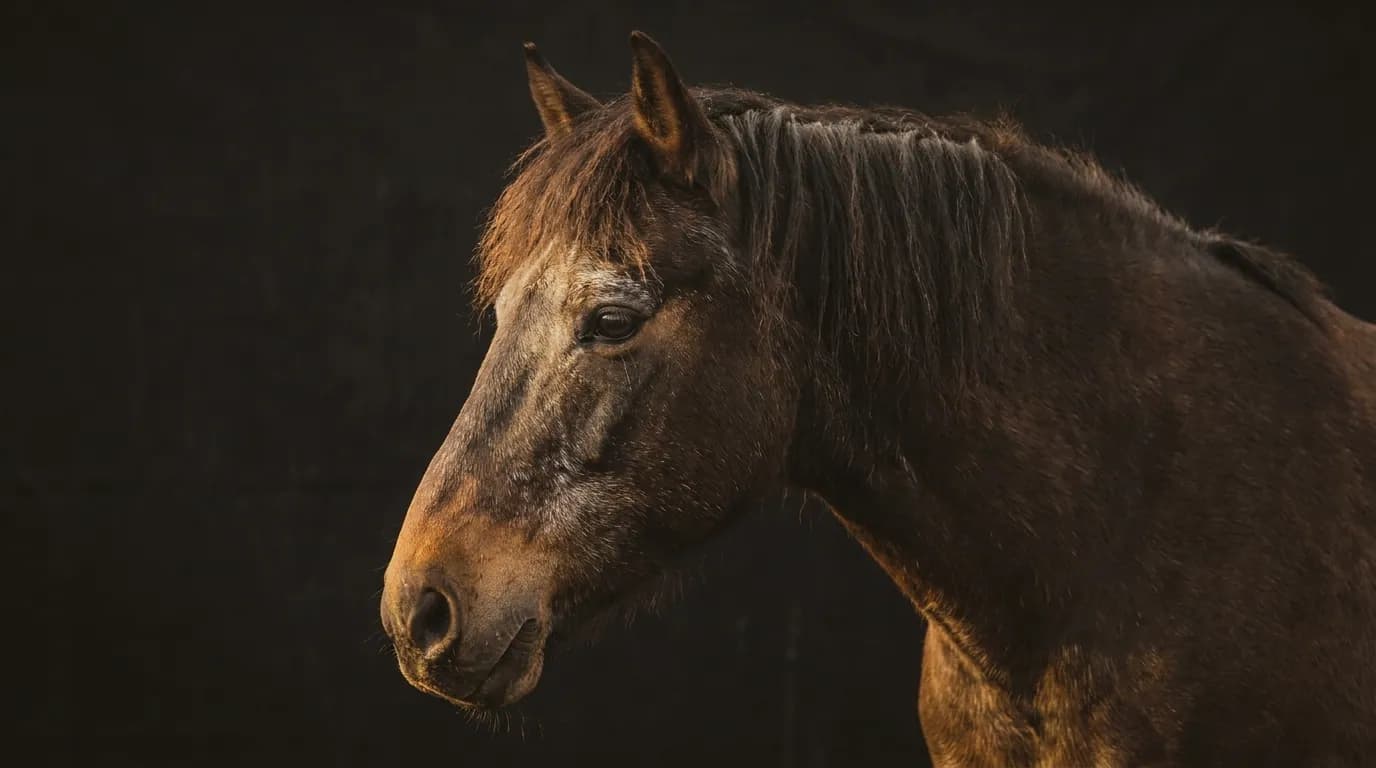
Horses grow old — many well over twenty. A fixed threshold for senior management does not exist; in practice a closer look is worthwhile from about 18 to 20 years on, because from then several changes accumulate. A survey of horses over 20 years found at least one chronic health finding in around two thirds. Age is no disease — but it deserves an adapted management.
Keep weight and body condition in view
In the old horse the weight can tip in both directions: some put on reserves, many slowly lose substance with declining chewing ability. The treacherous thing about it is the speed — a change over weeks is hardly noticeable on one's own horse. Body Condition Score and weight tape estimate at fixed intervals make the trend visible before the eye notices it.
Feeding follows the chewing ability
The most important adjusting screw in the senior is the mouth. With a declining reserve crown, gaps or wave mouth, long forage becomes harder to break down — recognisable by wad-chewing or feed balls dropping to the ground (quidding). Senior feed is tailored to this situation: well digestible, energy-dense without high starch, with adapted protein. Where hay can no longer be sufficiently chewed, soaked hay cobs or forage replacement products step into its place — because the continuous forage supply (guidance value at least 1.5 % of the body mass dry matter per day) remains the basis even in old age. The detailed adaptation of the ration belongs in expert advice.
“In the old horse it is not what lies in the trough that decides, but what arrives in the stomach. The question is always first: can it chew that at all?”
Movement, hooves, parasites — the routines remain
Movement keeps the older musculoskeletal system supple; especially with beginning joint changes, even, gentle activity is mostly more favourable than standstill. Hoof care in the accustomed rhythm of six to eight weeks, regular dental control (in old age rather more often) and a faecal-sample-based, selective deworming remain fixed building blocks. Editorially flanking, for the ageing musculoskeletal system compounds such as green-lipped mussel are discussed, for the antioxidant status vitamin E — both supplementary feeds, no veterinary medicines and no substitute for a veterinary assessment.
Watchfulness for PPID
With age the probability for Equine Pituitary Pars Intermedia Dysfunction (PPID, formerly Cushing's) rises. Prevalence estimates lie at around a fifth in horses from 15 years on — tendency rising with age. Early, unspecific signs such as a delayed or uneven coat change, declining performance or recurring infections are an occasion to clarify the topic veterinarily, not to interpret it oneself.
Important: this text is educational and replaces no examination. Abnormalities in weight, coat change, chewing behaviour or movement belong in veterinary clarification. The named compounds are supplementary/dietetic feeds — in competition horses additionally check the FEI status of the preparations used.
Good senior management is no list of interventions, but an attitude: to look regularly, take small changes seriously and adapt the routines to what the horse can still perform. Quality of life arises from this attention — not from the last expensive additive in the bucket.
Sources
Compounds in this article
Usage note
This content is for information and education. It does not replace veterinary diagnosis or treatment. If your horse shows signs of illness, consult a veterinarian.
Keep reading
Summer eczema — why the skin is rarely where it starts
The reaction to the midge bite is the visible part. What lies beneath it decides the course.
HealthGrowing old without looking old — what really counts in the senior
Many complaints that pass for age-related are not. A look at what can be influenced.
HealthWhen the coat whispers — what the coat change reveals about the metabolism
Twice a year the horse rebuilds its entire coat. What happens in the metabolism while it does — and which signs can be read.