

Why almost every hay ration needs a mineral feed
Forage roughly covers energy and protein — but copper, zinc, selenium and often sodium lie in deficit depending on the soil. What a balanced mineral feed achieves and why more does not help more.
Equiterna Redaktion
Equine nutritionist · NRC / GfE
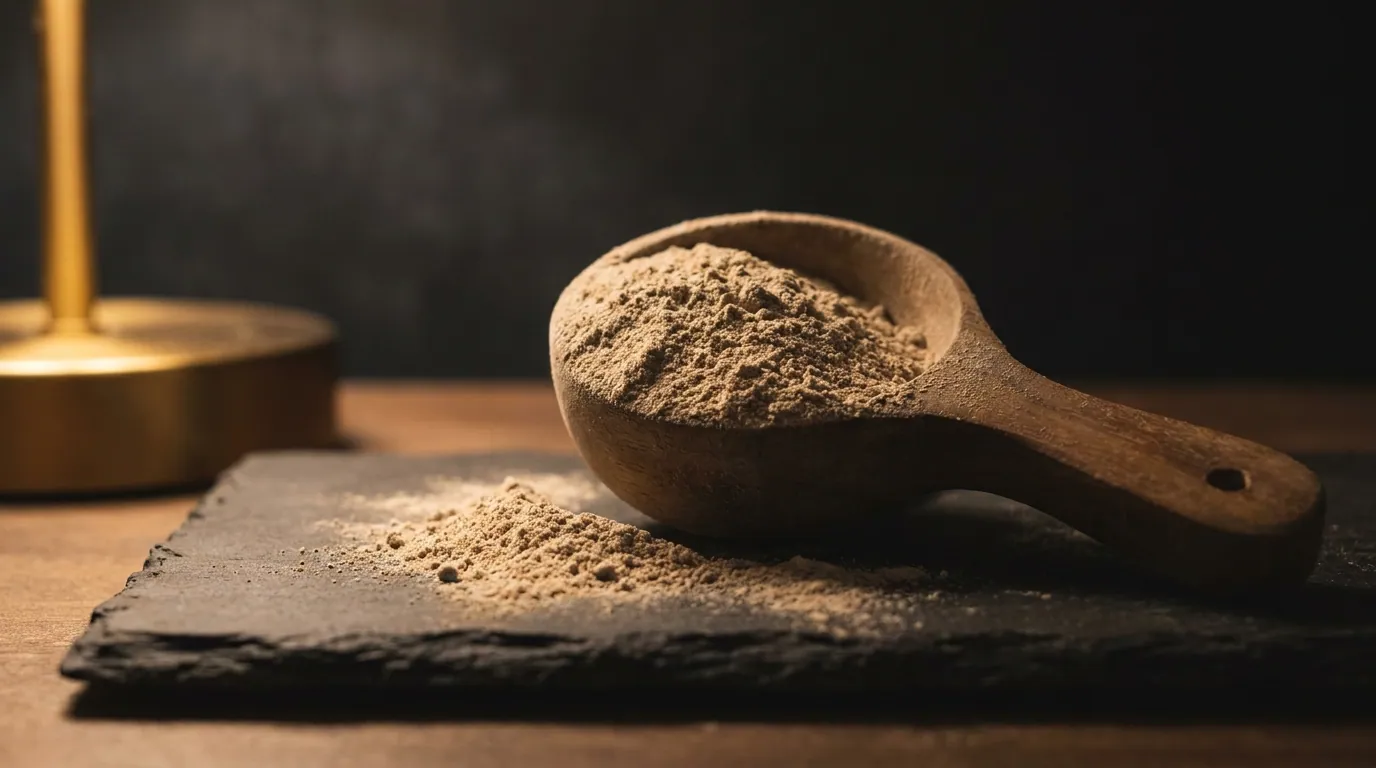
A ration of hay and pasture covers the energy and protein requirement of an adult horse in maintenance astonishingly reliably — that rarely fails. The gap lies elsewhere: with the trace elements. Copper, zinc and selenium regularly do not reach the recommended supply via pure forage, and this has a simple reason: their content in the grass depends on the soil on which it grows.
Why the soil determines the supply
Central European soils are selenium-poor over wide regions — this is well documented and transfers directly to the selenium content of the growth. Copper and zinc also fluctuate strongly with soil type, pH value and fertilisation. A hay analysis makes these gaps visible; without it one moves in blind flight. The consequence: two horses with an identical hay quantity can be very differently supplied depending on the origin of the feed.
Precisely this gap is closed by a mineral feed. It supplies no notable energy and hardly any protein — its task is to supplement the bulk and trace elements as well as fat-soluble vitamins that the forage does not bring along in sufficient quantity. With that it is a complementary feed in the sense of the feed regulation, no complete and no dietetic feed — and certainly no medicinal product.
Sodium: the silent exception
While most bulk elements are roughly covered via forage, sodium forms an exception: grass and hay are by nature low in sodium. Horses classically cover the requirement via a freely available salt lick or added sodium chloride — particularly relevant in horses that sweat. A good basic mineral feed takes sodium into account, but does not necessarily replace free access to salt.
“Hay satiates and supplies energy. Whether the horse is adequately supplied with trace elements it does not reveal — only the analysis reveals that.”
Why more helps more is wrong here
The obvious temptation — to dose generously when in doubt — backfires with trace elements. Firstly, they stand in antagonisms to one another: an excess of zinc or iron can hinder the copper uptake, which is why the ratio counts, not just the quantity. A copper-to-zinc ratio in the order of about 1 to 3 to 1 to 4 is widely aimed at. Secondly, selenium has a narrow window between requirement and too much.
Safety note: selenium is the trace element with the smallest safety margin. A chronic oversupply (selenosis) shows itself among other things in hair loss on mane and tail as well as in hoof changes. Mineral feed, concentrate feed and any selenium additives belong to be considered in their sum — and when in doubt via a blood level check in veterinary hands. More is not better here.
The sensible way is therefore not the strongest, but the suitable mineral feed: one that closes the analysed gaps of the concrete ration, supplies the trace elements in a balanced ratio and respects the selenium upper limit. Whoever attunes hay and mineral feed to one another supplies more safely than whoever doses up on suspicion.
Sources
Compounds in this article
Usage note
This content is for information and education. It does not replace veterinary diagnosis or treatment. If your horse shows signs of illness, consult a veterinarian.
Keep reading
Summer eczema — why the skin is rarely where it starts
The reaction to the midge bite is the visible part. What lies beneath it decides the course.
HealthGrowing old without looking old — what really counts in the senior
Many complaints that pass for age-related are not. A look at what can be influenced.
HealthWhen the coat whispers — what the coat change reveals about the metabolism
Twice a year the horse rebuilds its entire coat. What happens in the metabolism while it does — and which signs can be read.