

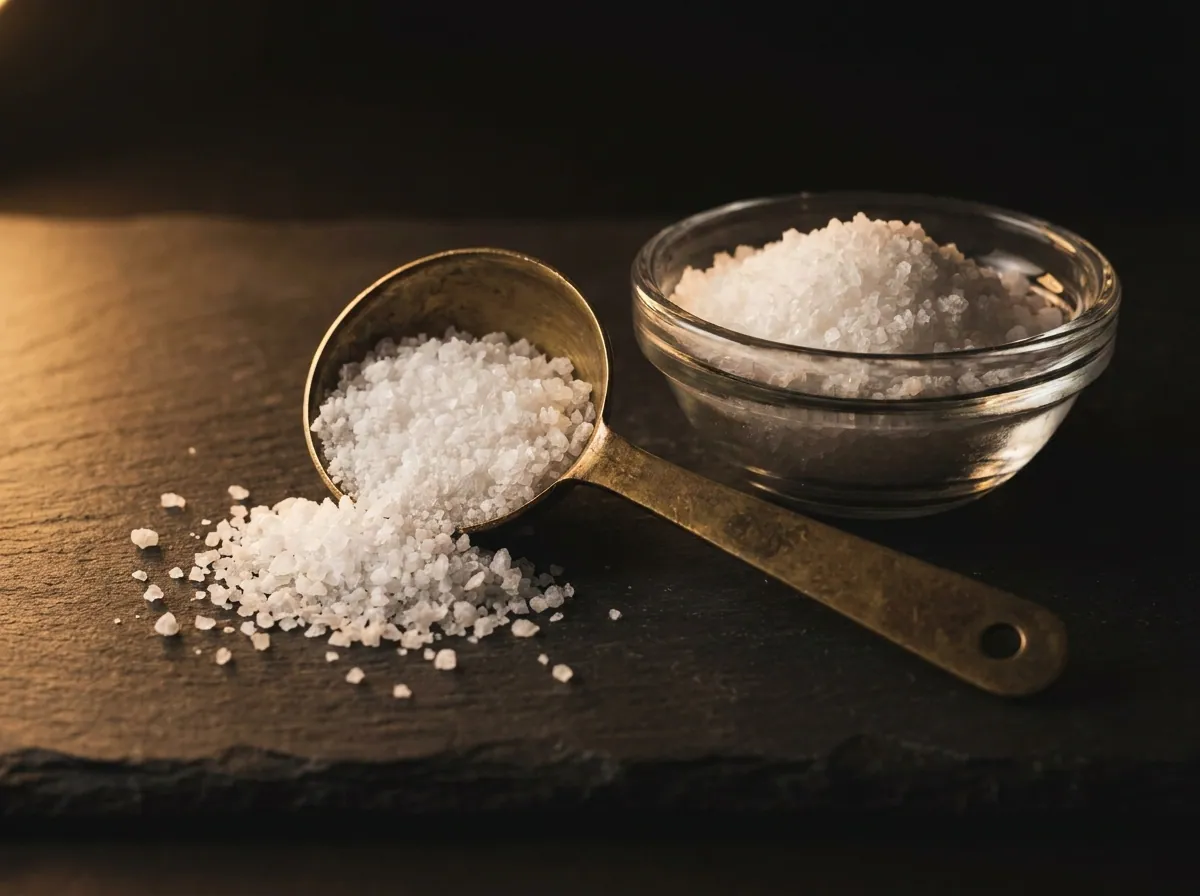
Sodium chloride
Salt · NaCl
Mechanism
Natrium und Chlorid sind die mengenmäßig bedeutendsten Elektrolyte im Schweiß. Pferd schwitzt hypoton-bis-isoton und verliert relativ viel Natrium und Chlorid. Eine freie Salz-Lecksteinversorgung deckt den Erhaltungsbedarf; bei intensiver Arbeit/Hitze ist gezielte Elektrolytgabe sinnvoll.
Cautions
- · Immer freien Zugang zu Wasser sicherstellen
- · Bei Nieren-/Herzerkrankung Rücksprache Tierarzt
Sources
Knowledge connections
Frequently asked questions
Is Sodium chloride a feed or a veterinary medicine for horses?
Equiterna classes Sodium chloride as “Complementary feed”. Legal framework: Regulation (EU) 2019/6 / TAMG (DE/AT), Feed Regulation (EC) 767/2009.
Is Sodium chloride allowed at FEI competitions?
In the profile, Sodium chloride is listed with the FEI status “Not listed”. The current FEI list is authoritative, so please check its latest version.
Which dosage do the sources give for Sodium chloride?
Stated in the profile: maintenance ~10–25 g/animal/day; much more with sweating. This is information from the literature, not an instruction for an individual horse.
Which sources are there for Sodium chloride?
The profile cites: NRC 2007, GfE 2014, and PMID:7363879.
Usage note
This content is for information and education. It does not replace veterinary diagnosis or treatment. If your horse shows signs of illness, consult a veterinarian.
“Nothing forced can ever be beautiful.”
Equiterna is an intermediary platform for equine knowledge, marketplace and tools — not a veterinary-medicines dealer, veterinary practice or pharmacy. Compound information is source-attributed (PubMed, specialist journals, NRC/GfE, EU regulations) and free of healing claims. Legal framework: Regulation (EU) 2019/6 / TAMG (DE/AT), Feed Regulation (EC) 767/2009, FEI Prohibited Substances List, HWG.