

Electrolytes and sweating — why a salt lick falls short in summer
Horse sweat is hypertonic: it carries out more sodium and chloride than pure water or a lick can replace under intense work. A look at losses, replacement and timing.
Equiterna Redaktion
Equine nutritionist · NRC / GfE
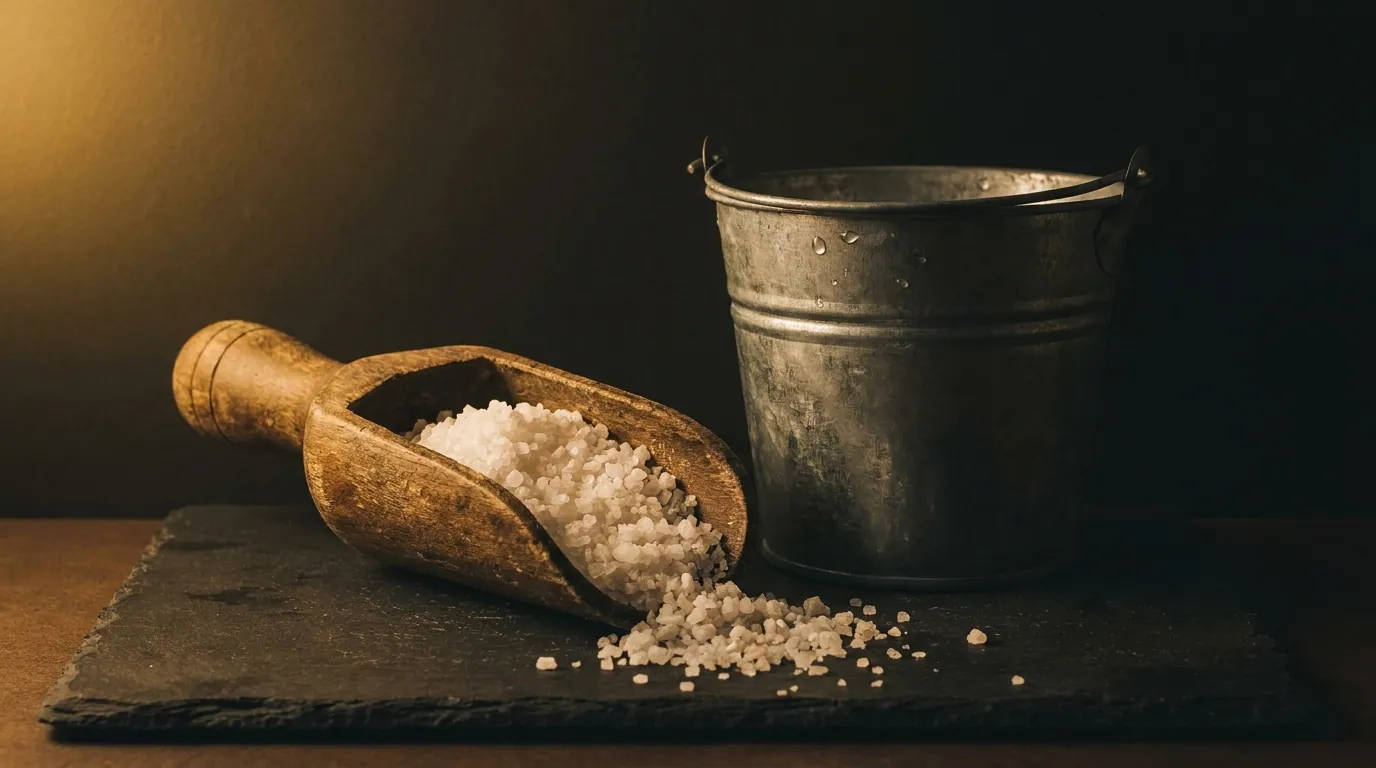
In summer and under athletic load, sweating is the most important way by which the horse gives off heat. Unlike in humans, horse sweat is hypertonic — it contains higher electrolyte concentrations than the blood plasma. With the sweat the horse therefore loses not only water, but disproportionately salts, above all sodium and chloride.
Why pure water is not enough
It is exactly this hypertonicity that is the crux. Whoever after intense work only refills water dilutes the already lowered electrolyte levels further — the thirst stimulus eases before the salt balance is restored. A salt lick covers the basic sodium requirement and supports a sufficient water intake, but reaches its limit with high sweat losses: the amount taken up voluntarily is limited and the lick supplies above all sodium chloride, hardly any potassium.
Three electrolytes are to the fore. Sodium and chloride form the main share of the sweat loss and are replaced together as sodium chloride. Potassium is also lost, but is in part already well covered via forage-focused rations — with very high losses it nonetheless belongs in the replacement. A well-considered electrolyte balancing reproduces these losses in their composition, instead of just pushing in table salt.
Timing and water belong together
Electrolytes only work with sufficient water. Highly concentrated doses on an empty, poorly watered stomach can irritate the digestive tract; sensible is the administration dissolved or in the feed and always with free access to water. With long load — endurance, eventing, hot competition days — the replacement is spread over the work and the recovery, instead of giving everything at once. Routinely, a freely accessible salt source plus needs-based supplementation on sweating days is the everyday line.
“The horse sweats out salt, not just water. Whoever only adds water back balances half the bill.”
Magnesium appears on many electrolyte mixes too, because small amounts are also lost via sweat and the requirement rises slightly with work and sweating. The main loss, however, lies clearly with sodium and chloride; an additional magnesium dose is no performance or calming lever in the sufficiently supplied horse. It is sensible when the overall ration shows an actual gap — that is clarified by the ration assessment.
FEI note: pure electrolytes (sodium, chloride, potassium) are regarded as uncritical and are not listed as a prohibited substance. Nonetheless, before the competition every supplementary and electrolyte preparation used belongs checked for further ingredients — mixed products sometimes contain additives with their own status. When in doubt, cross-check the declaration and the current FEI list.
The rule of thumb for hot days is thus unspectacular, but robust: plenty of water, a reliable salt source and on real sweating days an electrolyte replacement that reproduces the hypertonic composition of the sweat. Pure water or a lick alone do not carry the summer in sport.
Sources
Compounds in this article
Usage note
This content is for information and education. It does not replace veterinary diagnosis or treatment. If your horse shows signs of illness, consult a veterinarian.
Keep reading
Summer eczema — why the skin is rarely where it starts
The reaction to the midge bite is the visible part. What lies beneath it decides the course.
HealthGrowing old without looking old — what really counts in the senior
Many complaints that pass for age-related are not. A look at what can be influenced.
HealthWhen the coat whispers — what the coat change reveals about the metabolism
Twice a year the horse rebuilds its entire coat. What happens in the metabolism while it does — and which signs can be read.