

Joint metabolism in old age — what the compounds really deliver
Green-lipped mussel, MSM, glucosamine, chondroitin, hyaluronic acid: a sober look at a group of compounds with unevenly distributed evidence.
Equiterna Redaktion
Equine nutritionist · NRC / GfE
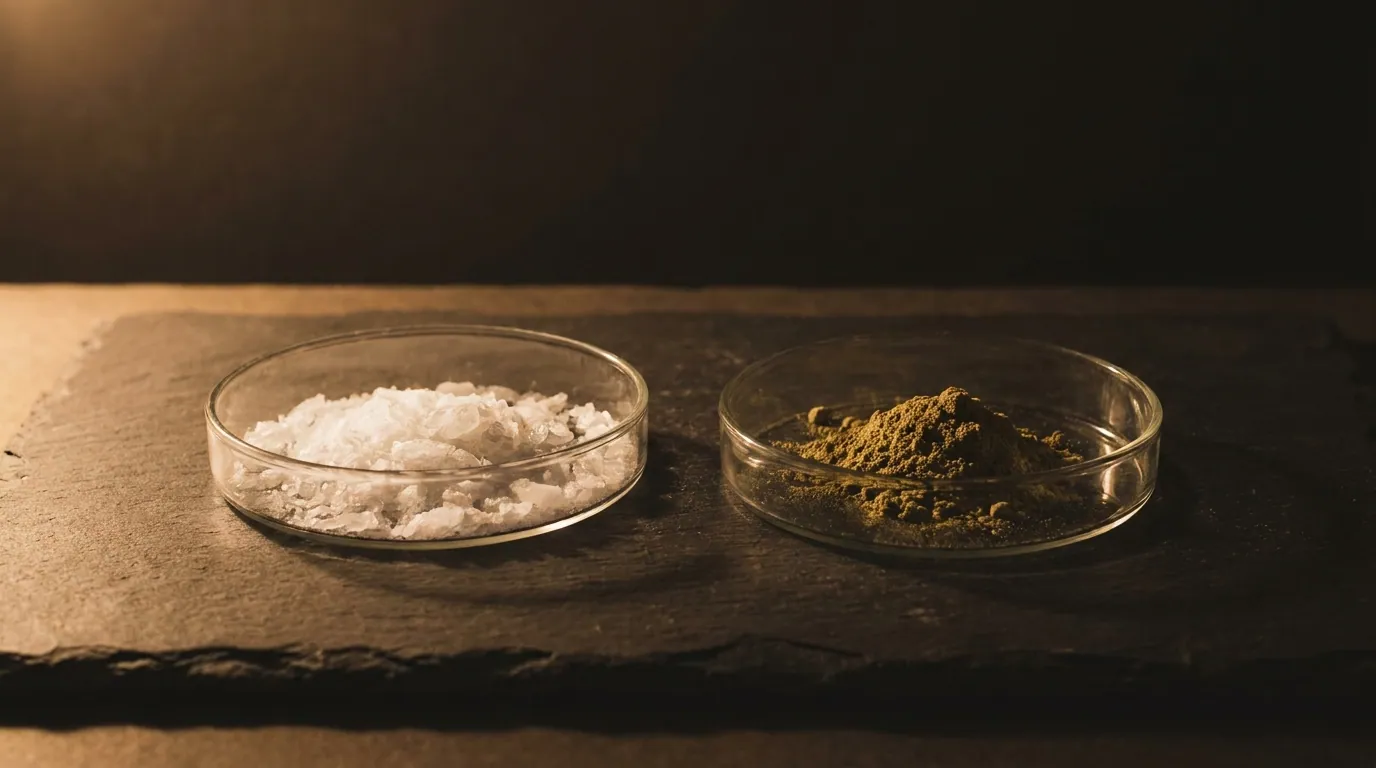
Over the years the horse's joint metabolism changes — that is physiology, not a defect. The market for joint-related supplementary feeds is correspondingly large and so often are the promises. A look at the individual compounds quickly shows: the evidence is very unevenly distributed.
The basis does not come from the bucket
Before a compound even comes up for discussion, two levers with the broadest evidence base come first: regular, joint-friendly movement and a body weight in the ideal range. Every excess kilo loads the joint surfaces measurably more. No powder replaces this foundation — and no powder reliably works against it.
Green-lipped mussel (Perna canaliculus) has one of the better controlled data sets in the horse among the named compounds. In a randomised, double-blind, placebo-controlled study, a significant improvement over placebo was shown in horses with chronic fetlock joint lameness under a standardised extract. One study is no proof for every product — but it is more than most compounds of this segment can present.
Where the evidence gets thinner
Glucosamine and chondroitin are the classics — and at the same time the area in which the data calls for the most caution. Pharmacokinetic work in the horse shows a low oral bioavailability of glucosamine in the single-digit to low double-digit percentage range; chondroitin is a large molecule whose uptake as a whole is questionable. Clinical efficacy studies come out inconsistent. That does not necessarily mean ineffective — but it does mean: no robust promise of effect.
MSM (methylsulfonylmethane) supplies bioavailable sulphur and is often given alongside; the data in the horse is thin and largely gathered on small groups. Hyaluronic acid is well characterised as a joint building block, but its domain is the veterinary application — the evidence for oral administration as a supplementary feed is clearly weaker than for the injectable, veterinarily applied form.
“A compound with thin evidence is not a bad compound — but it deserves honest words instead of big promises.”
Important for context: these compounds are supplementary feeds, not veterinary medicines. An existing joint finding — for instance a diagnosed osteoarthritis — belongs in veterinary treatment; feeding can accompany the metabolism, but replaces neither diagnosis nor therapy. Before the competition, additionally check the FEI status of the preparations used.
Realistically considered, this group of compounds moves between a well-studied candidate (green-lipped mussel) and several building blocks with plausible logic but thin evidence. Whoever knows this gives them with the right expectation — and invests the first energy where the lever is largest: movement and weight.
Sources
Compounds in this article
Usage note
This content is for information and education. It does not replace veterinary diagnosis or treatment. If your horse shows signs of illness, consult a veterinarian.
Keep reading
Summer eczema — why the skin is rarely where it starts
The reaction to the midge bite is the visible part. What lies beneath it decides the course.
HealthGrowing old without looking old — what really counts in the senior
Many complaints that pass for age-related are not. A look at what can be influenced.
HealthWhen the coat whispers — what the coat change reveals about the metabolism
Twice a year the horse rebuilds its entire coat. What happens in the metabolism while it does — and which signs can be read.