

Equine asthma — why the stable matters more than any powder
Dust, mould spores and endotoxins in the forage are the driving triggers. Husbandry and hay management are the central lever in this airway disease.
Equiterna Redaktion
Veterinarian · Sports medicine
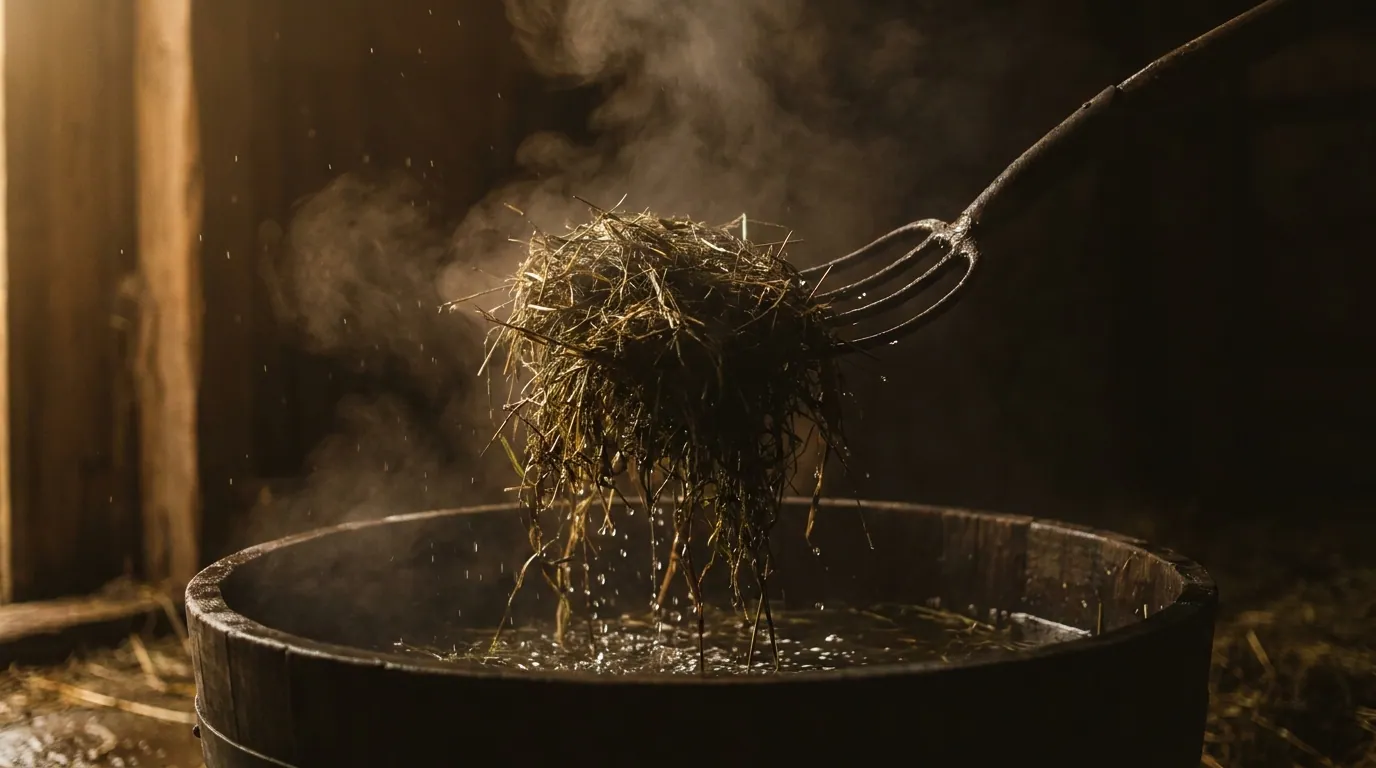
Equine asthma summarises chronic, non-infectious airway diseases that were formerly distinguished as IAD (mild to moderate) and RAO/heaves (severe). The ACVIM consensus statement maps both as a spectrum of one disease — from slight performance loss to visible respiratory distress at rest.
The trigger sits in the air
Driving are inhaled irritants and allergens: dust, mould spores, beta-glucans and endotoxins from hay, straw and bedding. The airways react with inflammation, increased mucus and a narrowing of the bronchi. That explains the leading symptoms — coughing, prolonged exhalation, and in severe form the typical abdominal press.
Why management makes the difference
With hardly any other clinical picture is the lever so clearly on the husbandry side. Steamed hay reduces the dust burden considerably; low-dust bedding such as shavings or cardboard, good stable ventilation and forgoing the hay net in favour of ground feeding noticeably lower the allergen load. Studies show that the willingness of the keepers to implement these environmental measures consistently is the decisive factor for the course.
“You cannot let an airway horse cough itself free and at the same time leave it standing in the dusty stable. The environment is the therapy with which everything stands and falls.”
The forage quality is the root here: hygienically flawless, mould-free hay is a basic prerequisite. Where that is not certain, steaming or alternative forage forms help to lower the spore load. The stable climate — humidity, air exchange, ammonia — co-decides the level of irritation the airways are exposed to daily.
From phytotherapy, plants such as ribwort plantain and thyme are traditionally associated with the airways — ribwort plantain contains soothing mucilage, thyme essential oils. Such building blocks are at most to be classified as supportive; they replace neither the husbandry optimisation nor a veterinarily steered treatment and are no healing promise.
Context: coughing and respiratory distress belong in veterinary clarification, also to distinguish from infections. The most effective and safest first step, however, almost always lies in the environment: dust out, ventilation in, secure forage quality.
Sources
Compounds in this article
Usage note
This content is for information and education. It does not replace veterinary diagnosis or treatment. If your horse shows signs of illness, consult a veterinarian.
Keep reading
Summer eczema — why the skin is rarely where it starts
The reaction to the midge bite is the visible part. What lies beneath it decides the course.
HealthGrowing old without looking old — what really counts in the senior
Many complaints that pass for age-related are not. A look at what can be influenced.
HealthWhen the coat whispers — what the coat change reveals about the metabolism
Twice a year the horse rebuilds its entire coat. What happens in the metabolism while it does — and which signs can be read.