

Equine Asthma (RAO / IAD)
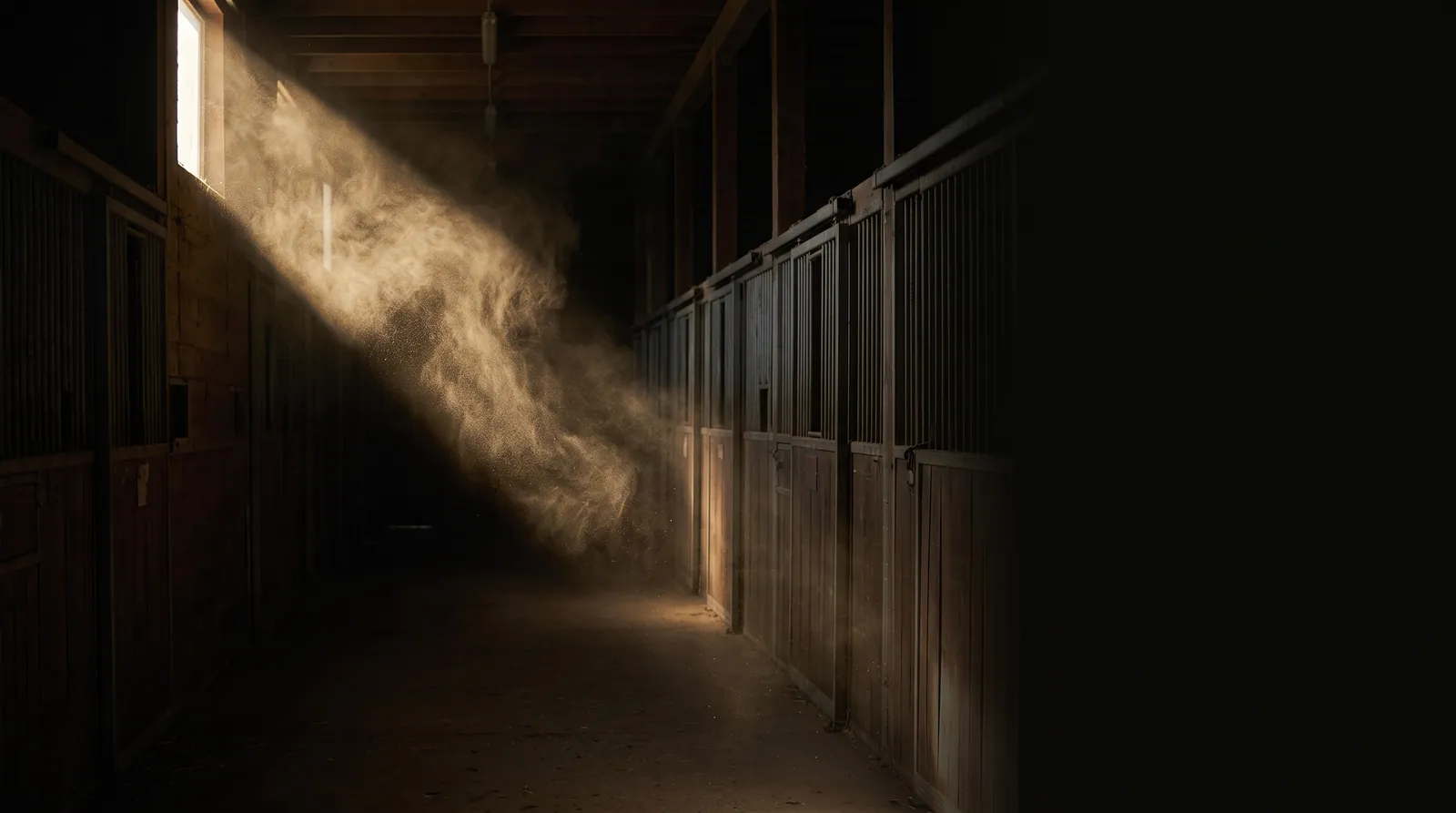
Chronic inflammatory airway disease caused by dust/mould allergens, with bronchospasm and increased mucus.
Veterinary care required
This condition belongs in veterinary diagnosis and treatment. Compounds are at most supportive.
Priority · vet & management
Allergen reduction (low-dust hay/haylage, good stable air) and veterinary therapy come first; compounds only act supportively.
Possible causes
- · dust and mould spores from hay/bedding
- · poor stable air/ammonia load
- · allergic airway hypersensitivity
- · pollen/pasture component (summer-pasture-associated form)
- · previous airway infections as a precursor
Supportive compounds · supplementary feed, not medication
Ribwort plantain
AMGFEI freetraditionally soothing for the airways
Compound profile →Thyme
AMGFEI freeessential oils, traditionally secretolytic
Compound profile →Linseed
AMGFEI freeomega-3 for the inflammatory balance
Compound profile →Spirulina
AMGFEI freediscussed as immune-modulating (allergic component)
Compound profile →Vitamin C
AMGFEI freeantioxidant under oxidative airway strain
Compound profile →Prevention
Low-dust (steamed) hay, good stable ventilation, low-dust bedding and plenty of fresh air reduce the allergen load and flare-ups.
Equiterna's take
Equiterna sees equine asthma primarily as an environment/allergen topic: reducing the dust load comes first. In addition, holistic feeding practice traditionally discusses a stable, well-nourished gut in the sense of the gut-lung axis. The active substances used are complementary feeds — meant to accompany, not to replace veterinary therapy.
Usage note
This content is for information and education. It does not replace veterinary diagnosis or treatment. If your horse shows signs of illness, consult a veterinarian.
Equiterna is an intermediary platform for equine knowledge, marketplace and tools — not a veterinary-medicines dealer, veterinary practice or pharmacy. Compound information is study-attributed and free of healing claims. Legal framework: Regulation (EU) 2019/6 / TAMG (DE/AT), Feed Regulation (EC) 767/2009, FEI Prohibited Substances List, HWG.