

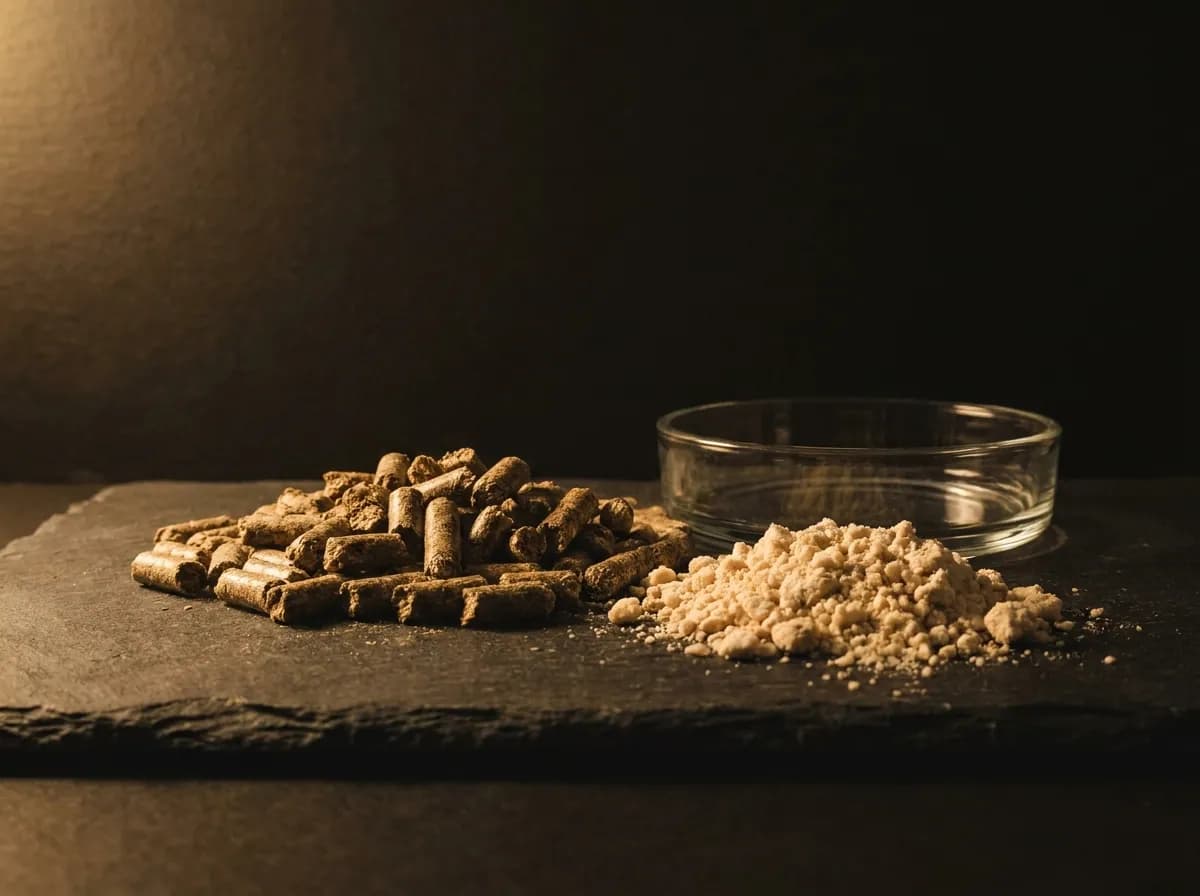
Methionine
DL-methionine
Mechanism
Methionin ist eine essenzielle, schwefelhaltige Aminosäure und nach Lysin häufig zweit-limitierend. Als Schwefellieferant ist es an der Bildung von Keratin beteiligt — und Keratin ist der Baustoff von Hufhorn UND Haar. Das erklärt, warum derselbe Engpass sich am Huf und am Fell zeigen kann und warum der Bedarf im Fellwechsel steigt, wenn das gesamte Haarkleid neu gebildet wird. Oft mit Biotin und Zink kombiniert. Sehr hohe Gaben sind nicht sinnvoll und können kontraproduktiv sein.
Cautions
- · Überdosierung kann den Aminosäure-Haushalt stören
Sources
Knowledge connections
Frequently asked questions
Is Methionine a feed or a veterinary medicine for horses?
Equiterna classes Methionine as “Complementary feed”. Legal framework: Regulation (EU) 2019/6 / TAMG (DE/AT), Feed Regulation (EC) 767/2009.
Is Methionine allowed at FEI competitions?
In the profile, Methionine is listed with the FEI status “Not listed”. The current FEI list is authoritative, so please check its latest version.
Which dosage do the sources give for Methionine?
Stated in the profile: approx. 2–4 g/animal/day in hoof blends (warmblood). This is information from the literature, not an instruction for an individual horse.
Which sources are there for Methionine?
The profile cites: NRC 2007, PMID:30284316, and GfE 2014.
Usage note
This content is for information and education. It does not replace veterinary diagnosis or treatment. If your horse shows signs of illness, consult a veterinarian.
“Nothing forced can ever be beautiful.”
Equiterna is an intermediary platform for equine knowledge, marketplace and tools — not a veterinary-medicines dealer, veterinary practice or pharmacy. Compound information is source-attributed (PubMed, specialist journals, NRC/GfE, EU regulations) and free of healing claims. Legal framework: Regulation (EU) 2019/6 / TAMG (DE/AT), Feed Regulation (EC) 767/2009, FEI Prohibited Substances List, HWG.