

Equine (Grey Horse) Melanoma
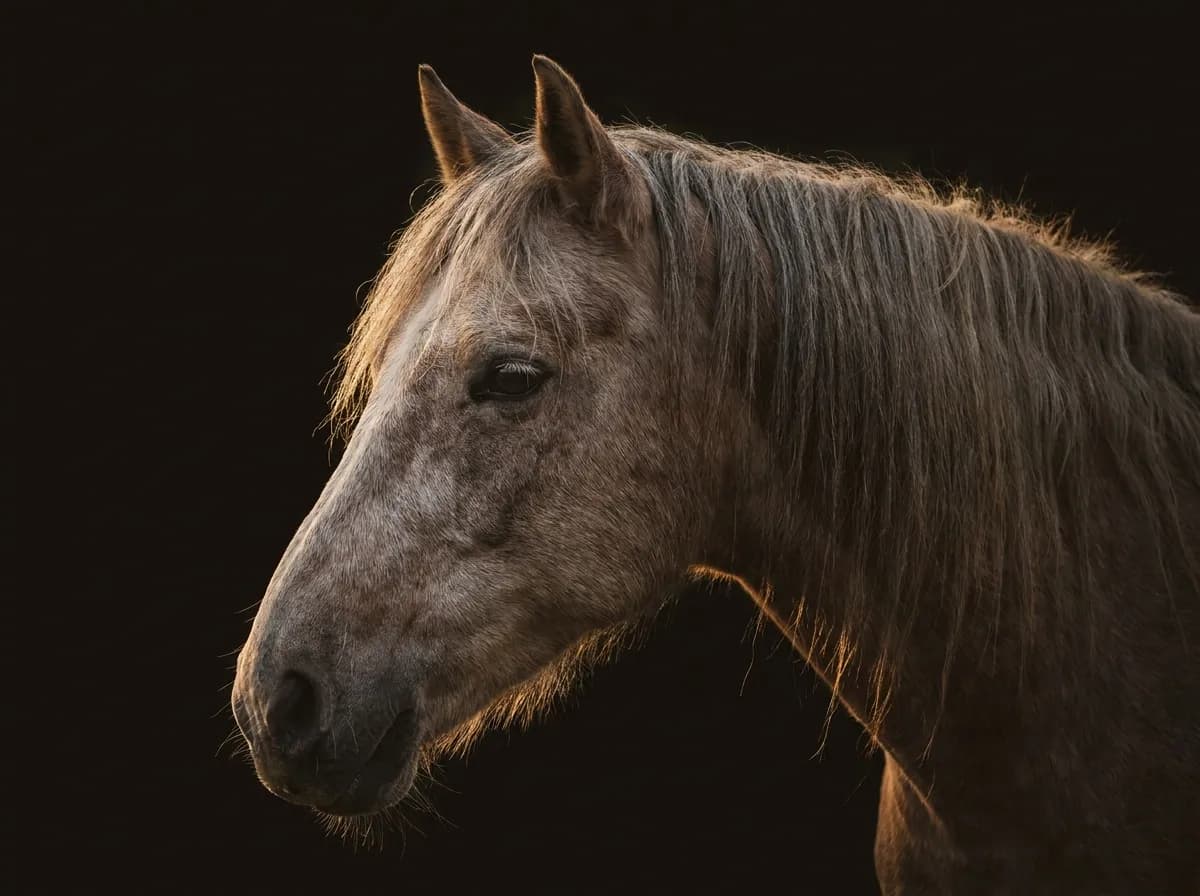
The equine melanoma is a tumour of the pigment-forming cells that predominantly affects older greys (grey horses) — very common in old greys. Typical sites are the underside of the tail/dock, the anal region/perineum, the lips and the parotid (salivary gland) region. Many melanomas grow slowly over years and seem benign at first, but a considerable proportion can become malignant, grow invasively or spread — a reliable prediction is not possible from the outside.
Veterinary care required
This condition belongs in veterinary diagnosis and treatment. Compounds are at most supportive.
Priority · vet & management
Every new or growing nodule belongs to veterinary assessment — location, size and growth behaviour are documented and monitored over time, with further diagnostics if needed. The vet alone decides on watching, surgical removal or other veterinary options; self-treatment is not indicated. Complementary feeds have no curative role here.
Possible causes
- · genetic predisposition of grey horses (greying/STX17 background)
- · older age — frequency rises markedly with the years
- · predisposition-related dysregulation of the pigment cells
- · location often in skin/mucosal areas with thin cover (tail dock, perineum, parotid)
Supportive compounds · supplementary feed, not medication
Prevention
There is no true prevention for the grey horse's genetic predisposition; decisive is the regular palpation and checking of the typical sites to have changes assessed by the vet early.
Equiterna's take
Equiterna treats grey-horse melanoma as a senior monitoring topic: looking benign is not a diagnosis. New or growing nodules belong assessed by the vet and observed over time — not self-treated.
Usage note
This content is for information and education. It does not replace veterinary diagnosis or treatment. If your horse shows signs of illness, consult a veterinarian.
Equiterna is an intermediary platform for equine knowledge, marketplace and tools — not a veterinary-medicines dealer, veterinary practice or pharmacy. Compound information is study-attributed and free of healing claims. Legal framework: Regulation (EU) 2019/6 / TAMG (DE/AT), Feed Regulation (EC) 767/2009, FEI Prohibited Substances List, HWG.