
Avoiding sand colic — how sand gets into the gut and out again
On short grazed-down, sandy pastures the horse takes up sand, which can accumulate in the hindgut. Why clean feeding and plenty of forage are the most effective levers — and how honestly psyllium must be classified.
Equiterna Redaktion
Veterinarian · Sports medicine
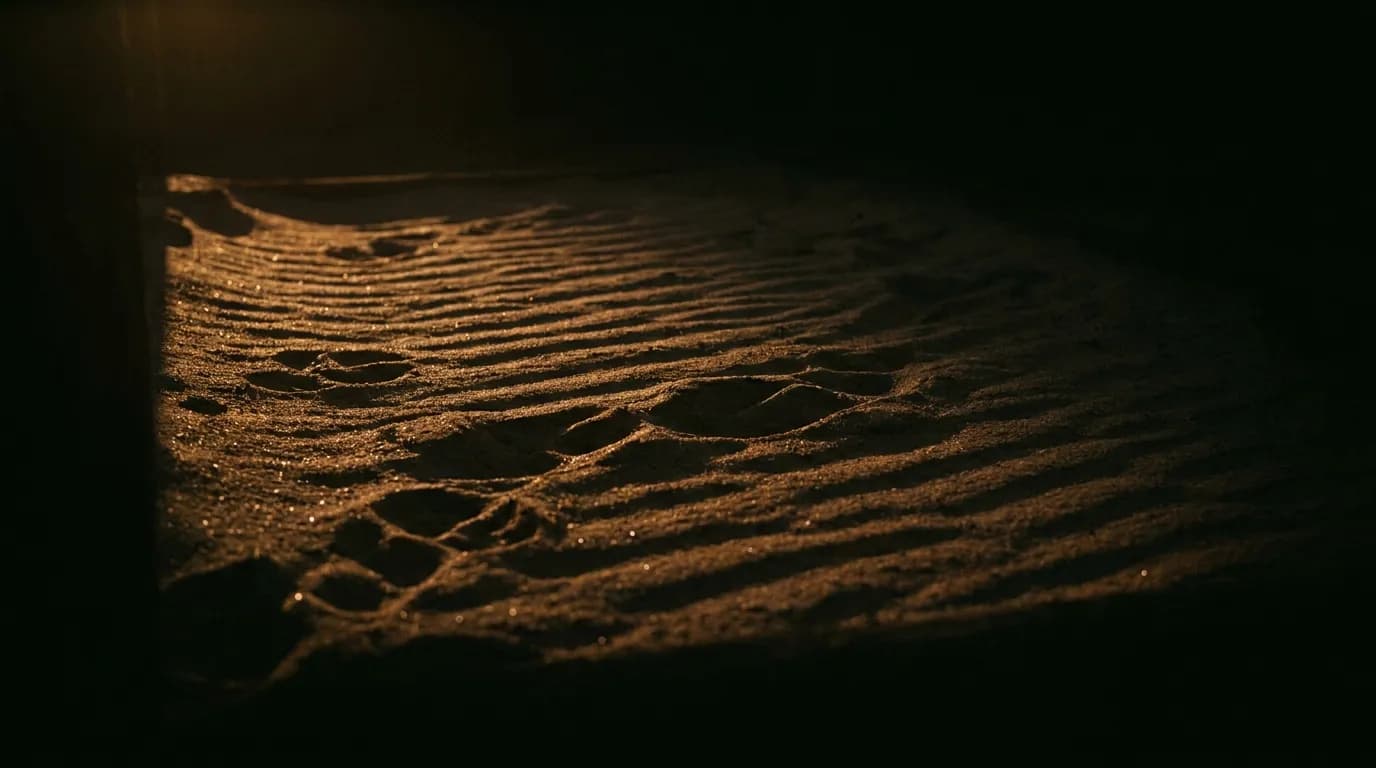
Sand colic describes abdominal pain that arises from sand accumulated in the gut. The horse does not take up this sand on purpose, but unnoticed with the feed: above all where it tears grass on short grazed-down, sandy pastures right down close to the ground or takes up hay and concentrate directly from the sandy floor. With every bite fine sand particles migrate along into the digestive tract.
Why sand accumulates in the gut
Sand is heavier than the feed slurry. In the hindgut, especially in the wide gut segments with their bends, it can settle and accumulate at the lowest point instead of being fully transported onward. Smaller amounts the horse usually excretes again unnoticed. But if larger amounts deposit over weeks, the sand irritates the gut mucosa, disturbs the gut motility and can lead to impaction and thus to colic — in part accompanied by diarrhoea and a loss of performance.
Prevention begins on the ground
The most effective lever is to keep the sand uptake small from the outset. Hay and concentrate belong on a clean ground — on mats, in racks or troughs instead of directly on the sandy floor. Overgrazed, short grazed-down paddocks on sandy ground are the classic risk source and should be relieved or avoided. A plentiful, continuous forage supply keeps the gut moving and supports the natural transport-away of sand; juicy, high-quality grass and a healthy hindgut milieu work in the same direction.
That is at the same time good general colic prevention: plenty of fibre, short feeding pauses, clean feed and sufficient movement. Whoever keeps horses on a sandy site can roughly observe the sand content in the faeces and adjust the pasture management accordingly — but the classification of a concrete finding belongs in veterinary hands.
“Most sand is not prevented in the gut, but at the feeding place. What is never taken up does not have to be laboriously gotten out again either.”
Traditionally, psyllium husks are named, whose mucilage is supposed to bind sand and promote its transport-away. Here honesty is worthwhile: the evidence for a reliable sand removal by orally fed psyllium in usual amounts is limited. A controlled study found no significant advantage of a psyllium-containing product over management alone for sand excretion; in the clinic psyllium is used rather in high dosing via a nasogastric tube and mostly in combination — that is treatment, not prevention. As an everyday cure-all psyllium is thus not suited; the more robust lever remains the avoidance of the sand uptake.
Emergency note: a colic is always a veterinary emergency. Signs such as pawing, flank watching, frequent lying down and rolling, sweating or absent faecal passage require immediate veterinary action. This article describes prevention via feeding and pasture management; it replaces neither diagnosis nor treatment and gives no healing promise.
Sources
Usage note
This content is for information and education. It does not replace veterinary diagnosis or treatment. If your horse shows signs of illness, consult a veterinarian.
Keep reading
Summer eczema — why the skin is rarely where it starts
The reaction to the midge bite is the visible part. What lies beneath it decides the course.
HealthGrowing old without looking old — what really counts in the senior
Many complaints that pass for age-related are not. A look at what can be influenced.
HealthWhen the coat whispers — what the coat change reveals about the metabolism
Twice a year the horse rebuilds its entire coat. What happens in the metabolism while it does — and which signs can be read.