
Body Condition Score in practice — the hand beats the eye
How the Henneke scale distinguishes between winter coat and fat pad.
Equiterna Redaktion
Groundwork & Centered Riding
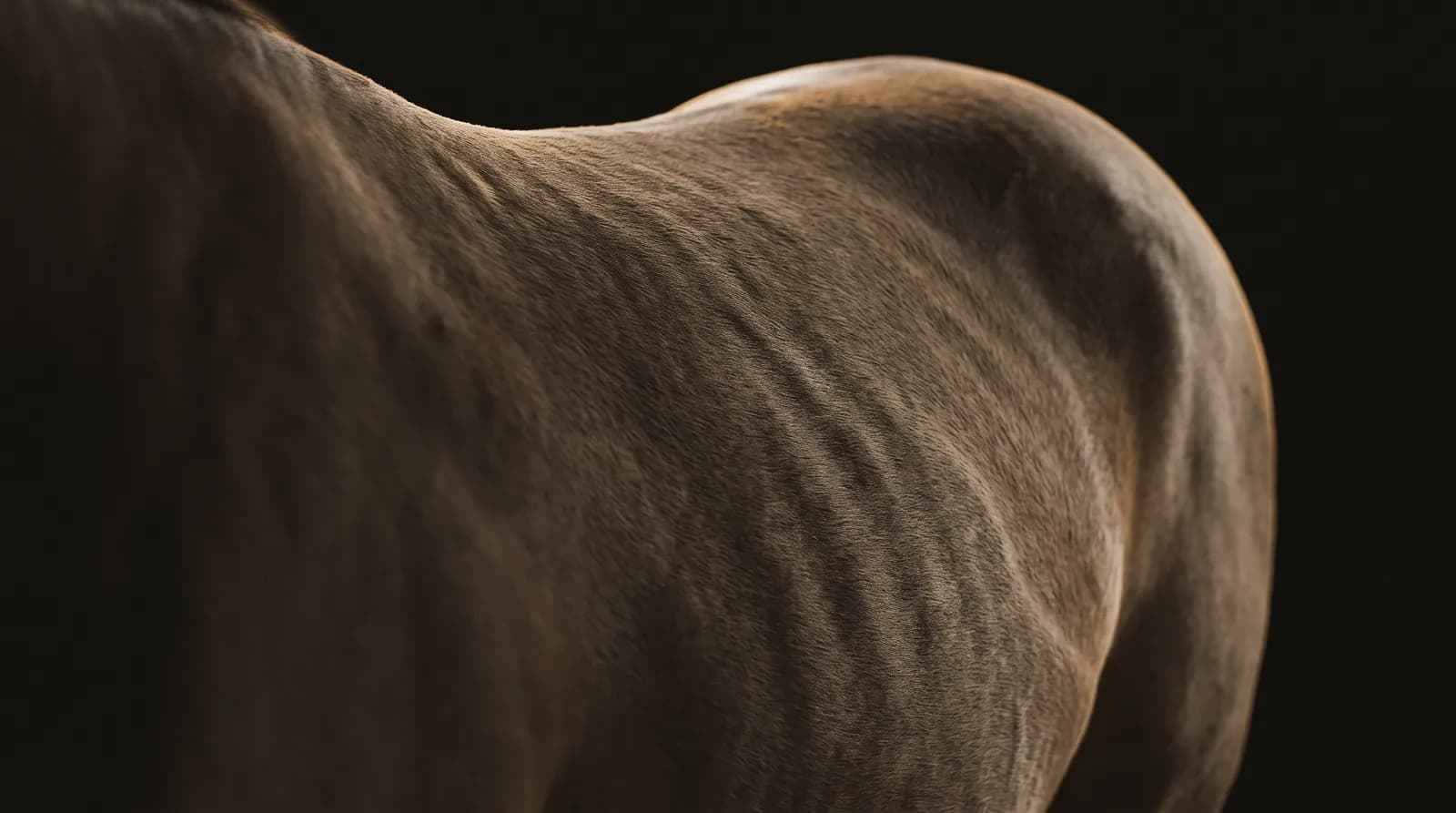
The winter coat deceives. Under dense fur a horse can carry clearly more — or less — substance than the eye suspects. This is exactly what the Body Condition Score was developed for.
Six regions, one scale
The Henneke scale assesses six body regions from 1 (emaciated) to 9 (obese). What matters is palpation, not observation: neck, withers, ribs, loin, tailhead and shoulder are judged with the flat hand.
“Whoever lays on the hand once a month sees the change coming before the scale shows it.”
The "Body Condition Score" tool on Equiterna guides you step by step through all six regions and classifies the result automatically.
Sources
Usage note
This content is for information and education. It does not replace veterinary diagnosis or treatment. If your horse shows signs of illness, consult a veterinarian.
Keep reading
Summer eczema — why the skin is rarely where it starts
The reaction to the midge bite is the visible part. What lies beneath it decides the course.
HealthGrowing old without looking old — what really counts in the senior
Many complaints that pass for age-related are not. A look at what can be influenced.
HealthWhen the coat whispers — what the coat change reveals about the metabolism
Twice a year the horse rebuilds its entire coat. What happens in the metabolism while it does — and which signs can be read.