

Skip to content
← Compound profiles
Image for the Phytotherapy compound group
Phytotherapy

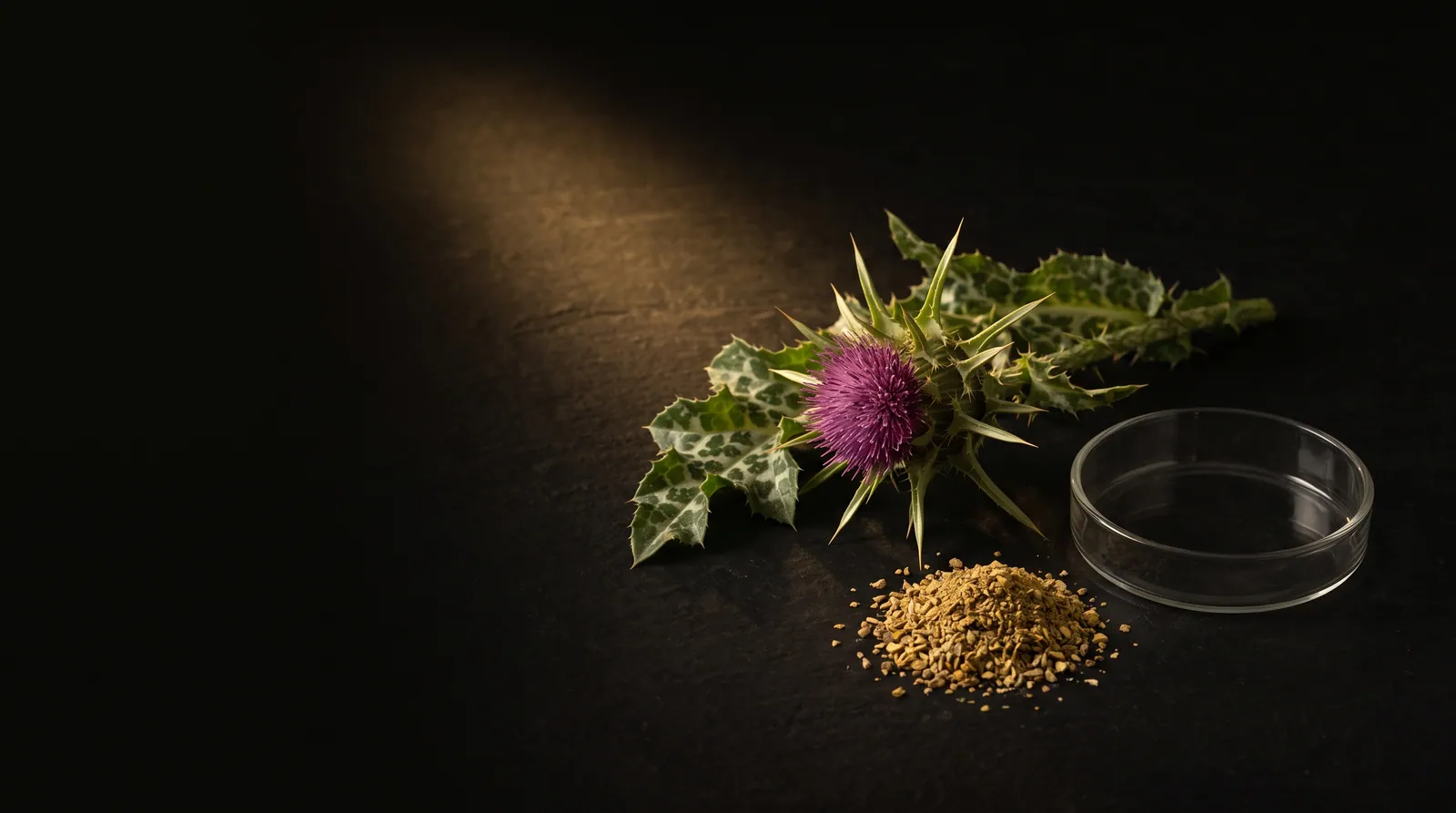
Milk thistle

Silybum marianum

Mechanism

Der Silymarin-Komplex (u. a. Silibinin) aus den Früchten der Mariendistel wirkt membranstabilisierend an Hepatozyten und antioxidativ. Traditionell wird Mariendistel zur Unterstützung der Leber verwendet; in equinen Settings wurde der adjuvante Einsatz untersucht. Die Evidenz beim Pferd ist begrenzt.

Cautions

  • · Not a stand-alone therapy for liver disease — consult a vet

Sources

JEVS 2013Hackett et al. — Milk thistle in horses (JEVS)
Pferdeheilkunde 2019Pferdeheilkunde — Silymarin equin
PMID:17213517Pradhan & Girish 2006 (Indian J Med Res) — Review Silymarin hepatoprotektiv

Products containing Milk thistle

Hufe

Biotin Hoof Mixture

St. Hippolyt

Not orderable →
Magen

GastriVet Pellets

NAF

Not orderable →
Leber

GlucoGard

St. Hippolyt

Not orderable →
Leber

Glandogard

St. Hippolyt

Not orderable →
Nerven

Equilizer

St. Hippolyt

Not orderable →
Nerven & Muskel

Nr. 19 Mordskerl

Dr. Weyrauch

Not orderable →
Magen

Nr. 12 Otto

Dr. Weyrauch

Not orderable →
Leber

Nr. 5 Frühlingserwachen

Dr. Weyrauch

Not orderable →
Leber

Herbs Leber-Fit

Höveler

Not orderable →
Grundversorgung

Mineral Bricks

Eggersmann

Not orderable →
Leber

E VET heparOforte

Eggersmann

Not orderable →
Magen

Vitalize Gastro Plus E

Eggersmann

Not orderable →
Leber

HEPADURE

MASTERHORSE

Not orderable →
Leber

Leberpellets

PerNaturam

Not orderable →
Leber

Legaphyton

Equistro

Not orderable →
Gelenke

Multi-Flex

Hilton Herbs

Not orderable →
Leber

DeTox Gold

Hilton Herbs

Not orderable →
Magen

GastriX

Hilton Herbs

Not orderable →
Magen

Essential No. 1 Gesunder Darm

Laurel Nature

Not orderable →
Leber

Leber-Kräuter

marstall

Not orderable →
Leber

Bergsiegel Herb Care Hepar

agrobs

Not orderable →
Hufe

Bergsiegel Huf-Wohl

agrobs

Not orderable →

Knowledge connections

Related conditions
Laminitis & Equine Metabolic Syndrome (EMS) →liver support under metabolic strain
PPID (Equine Cushing's Syndrome) →liver support in senior metabolism
Sweet Itch (Summer Eczema) →liver support with recurrent skin strain
Liver Disease (Hepatopathy) →silymarin, membrane-stabilising/antioxidant (traditional liver support)
Mud Fever / Pastern Dermatitis →liver support with recurrent skin strain (traditional)
Hives (Urticaria) →liver support with recurrent skin strain (traditional)
Mange / Mites (Chorioptes/Sarcoptes) →liver support with recurrent skin strain (traditional)
Insulin Dysregulation / Insulin Resistance (ID/IR) →liver support under metabolic strain (traditional)
Hyperlipemia / Fatty Liver →liver support in the vet-supervised recovery phase (traditional, not curative)
Cryptopyrroluria (KPU) — a debated topic →traditional liver support — no evidence for a KPU-specific effect
Coat Change Disorders →liver support during the metabolically intensive change phase (traditional)
Photosensitisation (Light Dermatitis) →liver support ONLY in the liver-associated (secondary) form (traditional, adjunctive)
Pyrrolizidine Alkaloid Liver Damage (Ragwort, Senecio etc.) →silymarin, membrane-stabilising/antioxidant (traditional liver support) — does not replace removing the poison source and veterinary therapy
Cholangiohepatitis / Bile Duct Inflammation (possibly with gallstones) →silymarin, membrane-stabilising/antioxidant (traditional liver support) — only adjunctive to veterinary therapy
Journal articles on this compound
All sources in the study library →

Usage note

This content is for information and education. It does not replace veterinary diagnosis or treatment. If your horse shows signs of illness, consult a veterinarian.

“Nothing forced can ever be beautiful.”
Xenophon · On Horsemanship (c. 365 BC)

Equiterna is an intermediary platform for equine knowledge, marketplace and tools — not a veterinary-medicines dealer, veterinary practice or pharmacy. Compound information is study-attributed and free of healing claims. Legal framework: Regulation (EU) 2019/6 / TAMG (DE/AT), Feed Regulation (EC) 767/2009, FEI Prohibited Substances List, HWG.