

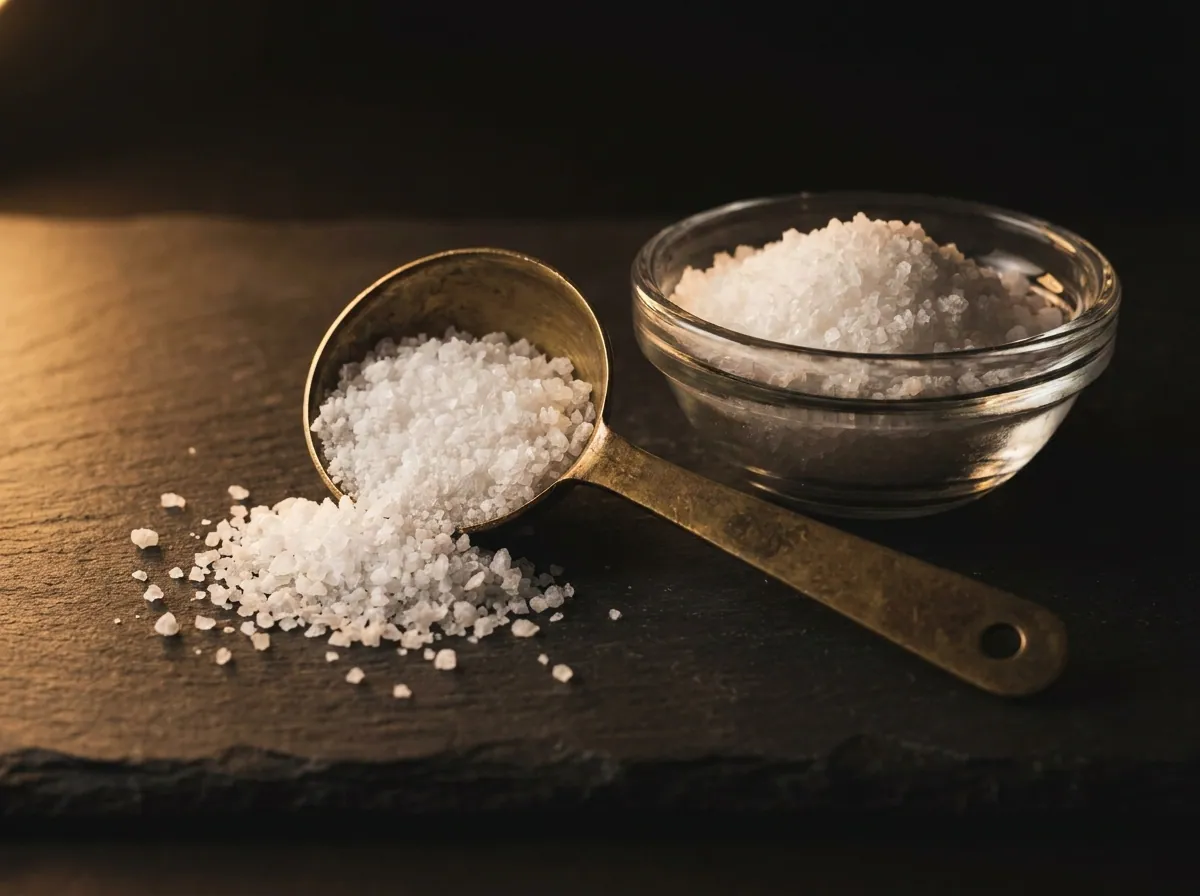
Steinsalz
Halit · Natriumchlorid · NaCl · Leckstein
Mechanism
Steinsalz (Halit) ist geologisch abgelagertes Natriumchlorid und funktionell mit Meer- und Speisesalz identisch (ca. 39 % Na, 61 % Cl). Es deckt Na-/Cl-Bedarf und Schweissverluste. Der Na-Erhaltungsbedarf liegt laut NRC (2007) bei ~20 mg/kg KM/Tag (~25 g Salz fuer 500 kg); bei Arbeit und Schwitzen steigt er deutlich, da Pferdeschweiss hyperton ist und grosse Na-/Cl-/K-Mengen verloren gehen (Zeyner et al. 2017, PLOS ONE, PMID 28045916). Steinsalz-Lecksteine sind die guenstige Standardquelle; ihr Nachteil ist, dass manche Pferde ueber das Lecken nicht genug aufnehmen - dann ist die abgewogene lose Gabe verlaesslicher. Ernaehrungsphysiologisch besteht kein Unterschied zu Meer- oder Himalaya-Salz.
Cautions
- · Manche Pferde lecken zu wenig - Bedarf ggf. lose zuwiegen
- · Nur mit freiem Wasserzugang (Salzvergiftungsrisiko bei Wasserentzug)
- · Na aus Mineralfutter gegenrechnen (Doppelversorgung vermeiden)
Sources
Usage note
This content is for information and education. It does not replace veterinary diagnosis or treatment. If your horse shows signs of illness, consult a veterinarian.
“Nothing forced can ever be beautiful.”
Equiterna is an intermediary platform for equine knowledge, marketplace and tools — not a veterinary-medicines dealer, veterinary practice or pharmacy. Compound information is study-attributed and free of healing claims. Legal framework: Regulation (EU) 2019/6 / TAMG (DE/AT), Feed Regulation (EC) 767/2009, FEI Prohibited Substances List, HWG.