

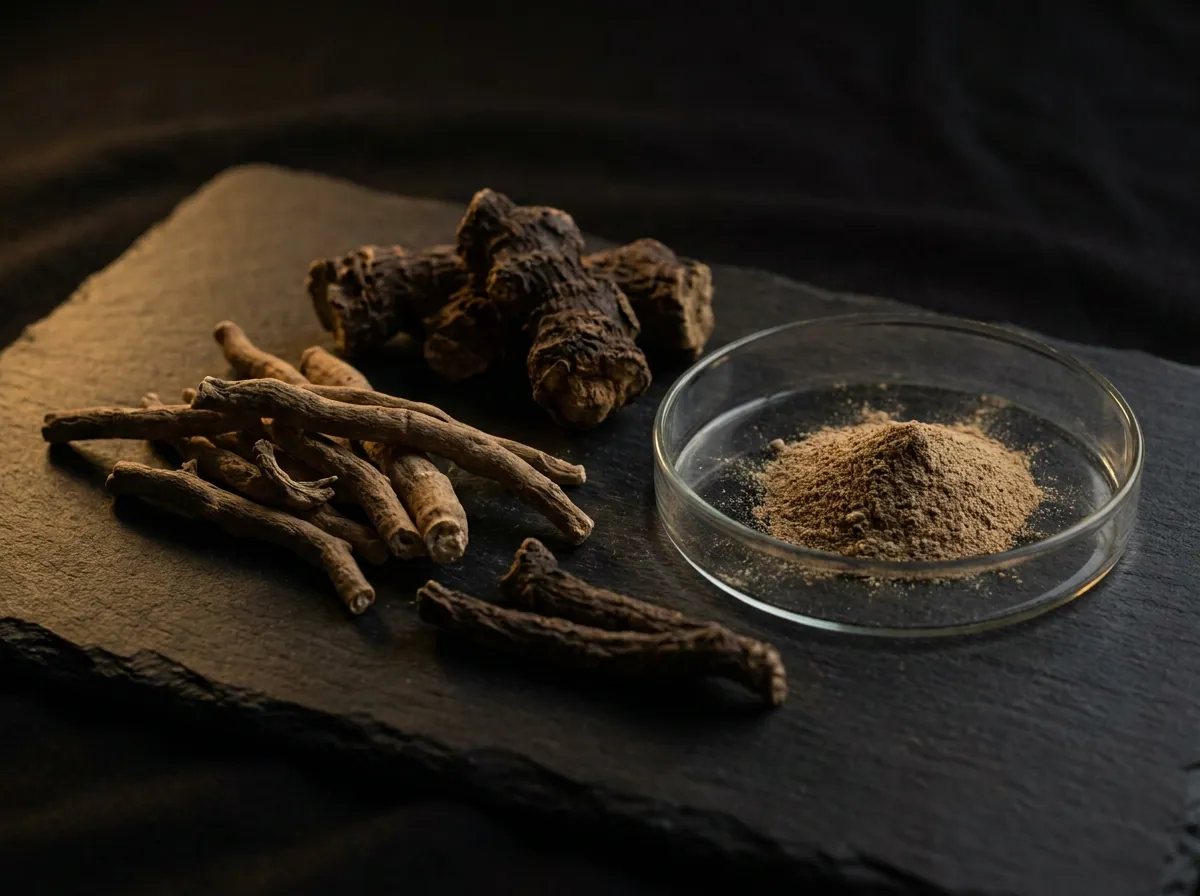
Rhodiola (Roseroot)
Rhodiola rosea · Roseroot
Mechanism
Rhodiola rosea (roseroot) is a classic adaptogen whose effect is attributed to the marker compounds rosavins and salidroside. In human- and rodent-model-based studies, an improved stress resistance and a reduction of fatigue/mental exhaustion are described. Controlled efficacy and pharmacokinetic data in the horse are lacking, so the transfer to the horse remains speculative. Since adaptogenic/performance- and fatigue-influencing botanicals are viewed critically in the sport context, the FEI/competition status must be checked before a competition.
Cautions
- · Horse-specific efficacy/PK data are lacking — transfer from human data is speculative
- · Check the FEI/competition status before competition (adaptogenic, discussed as performance-/fatigue-influencing)
- · Insufficiently studied in pregnancy/lactation — use cautiously
Sources
Usage note
This content is for information and education. It does not replace veterinary diagnosis or treatment. If your horse shows signs of illness, consult a veterinarian.
“Nothing forced can ever be beautiful.”
Equiterna is an intermediary platform for equine knowledge, marketplace and tools — not a veterinary-medicines dealer, veterinary practice or pharmacy. Compound information is study-attributed and free of healing claims. Legal framework: Regulation (EU) 2019/6 / TAMG (DE/AT), Feed Regulation (EC) 767/2009, FEI Prohibited Substances List, HWG.