

Pflanzenpeptide
Plant peptides · pflanzliche bioaktive Peptide · Phyto-Peptide
Mechanism
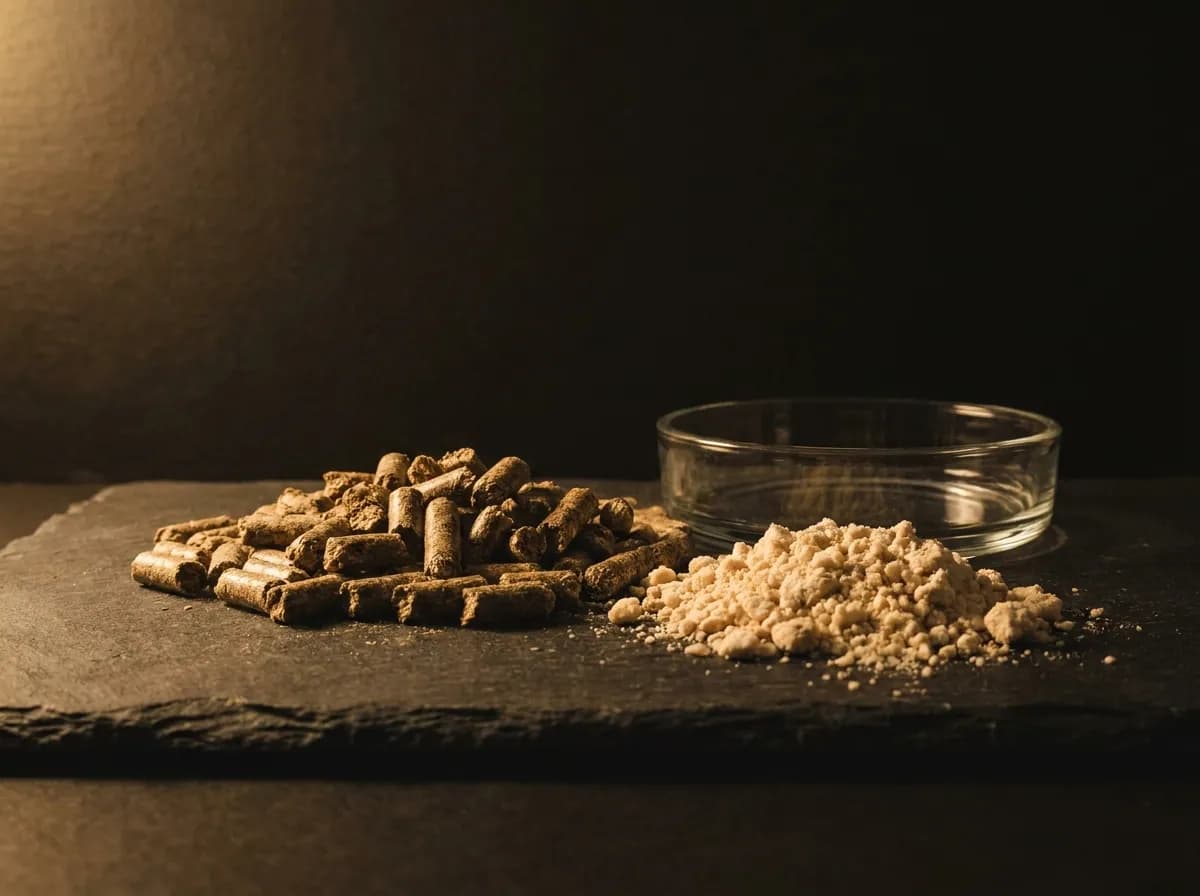
Pflanzliche Proteinhydrolysate enthalten Di-/Oligopeptide, die im Zell- und Tiermodell u. a. ACE-hemmende oder antioxidative Aktivitaet zeigen (Kadam et al. 2024 - Plant-derived bioactive peptides: a comprehensive review, Sustainable Food Proteins; Chakrabarti et al. 2018, Nutrients, doi:10.3390/nu10111738). Die Uebertragbarkeit dieser In-vitro-Effekte auf orale Wirkungen beim Pferd ist offen: Bioverfuegbarkeit, Dosis und funktionelle Relevanz sind fuer Pferde nicht belegt (Bioavailability of bioactive peptides ..., Trends Food Sci Technol 2018). Als Aminosaeurenquelle verhalten sich Pflanzenpeptide wie ihr Ausgangsprotein - dessen (beim Pferd oft limitierender) Lysingehalt bleibt bestimmend (NRC 2007).
Cautions
- · Bioaktivitaet stammt aus In-vitro-/Modellsystemen, nicht aus equinen Studien
- · Allergen-/Herkunftsdeklaration pruefen
- · Keine Heilaussagen am Tier
Sources
Usage note
This content is for information and education. It does not replace veterinary diagnosis or treatment. If your horse shows signs of illness, consult a veterinarian.
“Nothing forced can ever be beautiful.”
Equiterna is an intermediary platform for equine knowledge, marketplace and tools — not a veterinary-medicines dealer, veterinary practice or pharmacy. Compound information is study-attributed and free of healing claims. Legal framework: Regulation (EU) 2019/6 / TAMG (DE/AT), Feed Regulation (EC) 767/2009, FEI Prohibited Substances List, HWG.