

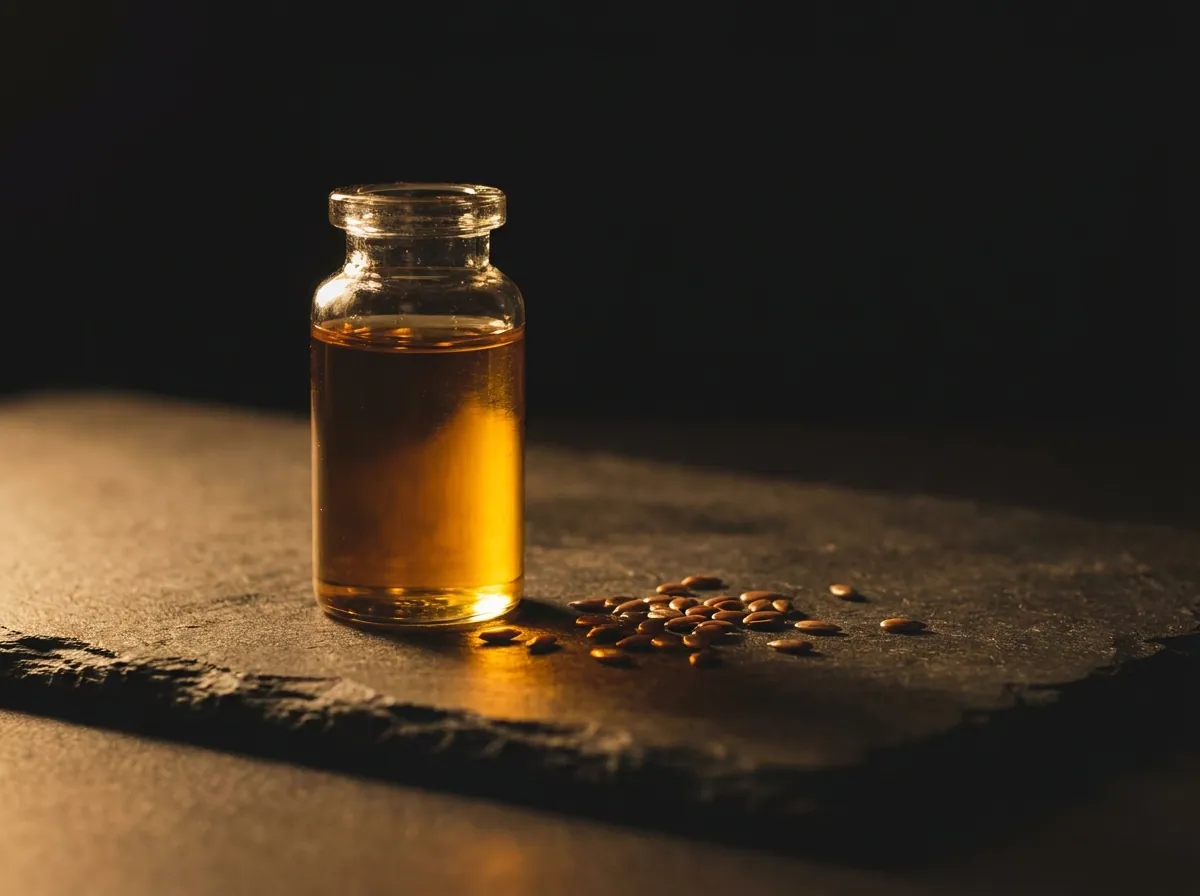
Linseed oil
Linum usitatissimum (oil)
Mechanism
At around 50–55 % alpha-linolenic acid (ALA), linseed oil is one of the ALA-richest plant sources and shifts the fatty-acid profile of the ration towards omega-3. Contributions to the skin barrier, coat quality and inflammatory balance are discussed. In the horse, however, the conversion of ALA into the long-chain omega-3 fatty acids EPA/DHA is limited — for targeted long-chain omega-3, algae or fish oil are the more direct sources. Linseed oil is sensitive to light and oxidation and should be stored cool and dark.
Cautions
- · Oxidation-/light-sensitive — use cool, dark and fresh
- · ALA-to-EPA/DHA conversion limited in the horse — not a full substitute for DHA/EPA sources
Sources
Usage note
This content is for information and education. It does not replace veterinary diagnosis or treatment. If your horse shows signs of illness, consult a veterinarian.
“Nothing forced can ever be beautiful.”
Equiterna is an intermediary platform for equine knowledge, marketplace and tools — not a veterinary-medicines dealer, veterinary practice or pharmacy. Compound information is study-attributed and free of healing claims. Legal framework: Regulation (EU) 2019/6 / TAMG (DE/AT), Feed Regulation (EC) 767/2009, FEI Prohibited Substances List, HWG.