

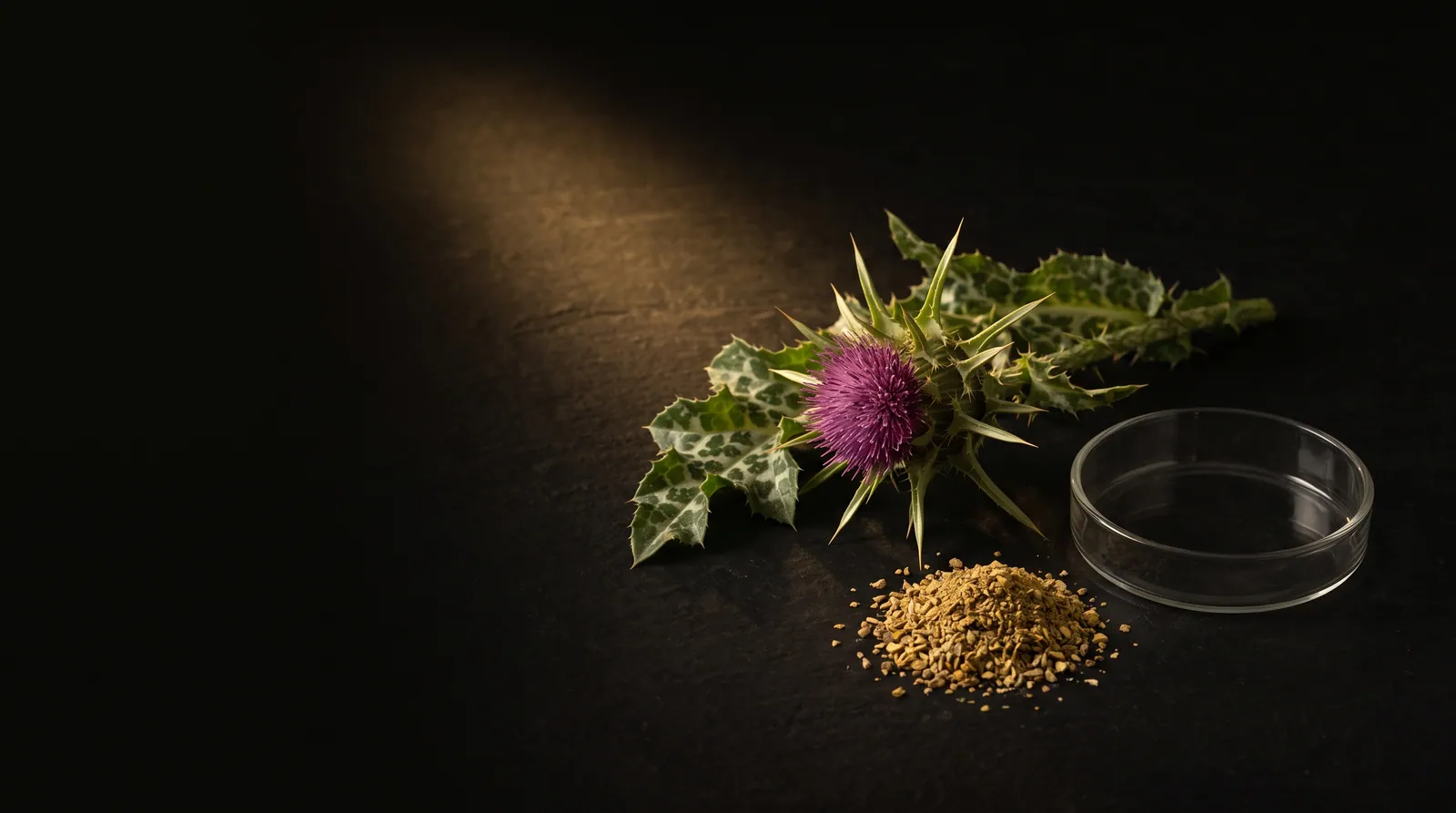
He Shou Wu
Reynoutria multiflora · Polygonum multiflorum · Fallopia multiflora · Fo-Ti · Heshouwu
Mechanism
Leitsubstanzen sind das Stilbenglykosid 2,3,5,4'-Tetrahydroxystilben-2-O-beta-D-glucosid (TSG) sowie Anthrachinone (Emodin, Physcion), Letztere mit laxierendem Potenzial. Sicherheitsbestimmend ist eine gut dokumentierte idiosynkratische, immunvermittelte arzneimittelinduzierte Leberschaedigung (IDILI) beim Menschen: Fallberichte und -serien (nach RUCAM-Kausalitaet bewertet) beschreiben cholestatische und hepatozellulaere Verlaufsformen, die meist selbstlimitierend, gelegentlich jedoch prolongiert oder fatal sind, mit haeufigem Rezidiv bei erneuter Einnahme (LiverTox Polygonum Multiflorum, NBK548795; comprehensive review, Front Pharmacol 2024, DOI 10.3389/fphar.2024.1427019, PMC11215120). Mechanistisch triggert das TSG-Aglykon eine adaptive Immunantwort (CD4+/CD8+-T-Zell-Proliferation, Zytokinsekretion) und ko-reaktive Metabolite/Emodin tragen zur Toxizitaet bei (PMID 38369066). Rohe Droge gilt als staerker leber- und darmaktiv als die traditionell aufwaendig praeparierte Form. Kontrollierte equine Daten fehlen vollstaendig; der orange Sicherheitsstatus ergibt sich primaer aus dem Human-Hepatotoxizitaetssignal. Einsatz nur als Ergaenzungsfuttermittel, ohne therapeutischen Anspruch am Tier.
Cautions
- · Idiosynkratische Leber-Toxizitaet beim Menschen dokumentiert (RUCAM-Fallserien) - bei Leberkontext und begleitender leberbelastender Medikation meiden; auf Leberzeichen achten
- · Rohe/ungenuegend verarbeitete Droge staerker toxisch und laxierend (Anthrachinone) - nur deklariert praeparierte Ware
- · Immunvermittelter Schadensmechanismus - Vorsicht bei Autoimmun-/Immunkontext
- · Keine equinen Sicherheitsdaten - nur als Ergaenzungsfuttermittel, kein Krankheitsbezug; tragende Stuten meiden
- · FEI: allgemeine Kraeuterprodukt-Warnung - vor Wettkampf abklaeren
Sources
Usage note
This content is for information and education. It does not replace veterinary diagnosis or treatment. If your horse shows signs of illness, consult a veterinarian.
“Nothing forced can ever be beautiful.”
Equiterna is an intermediary platform for equine knowledge, marketplace and tools — not a veterinary-medicines dealer, veterinary practice or pharmacy. Compound information is study-attributed and free of healing claims. Legal framework: Regulation (EU) 2019/6 / TAMG (DE/AT), Feed Regulation (EC) 767/2009, FEI Prohibited Substances List, HWG.