

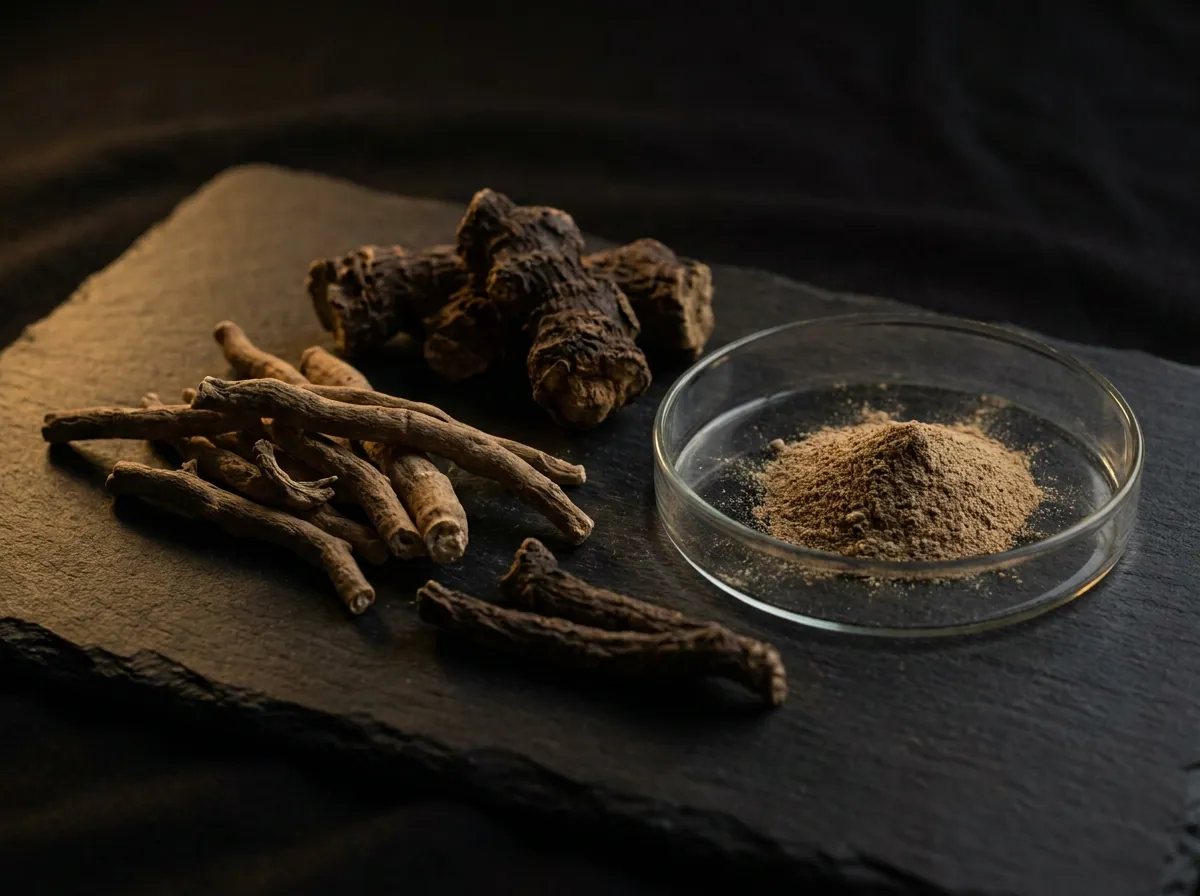
Ginseng
Panax ginseng
Mechanism
Ginseng (Panax ginseng) contains ginsenosides (saponins) credited with adaptogenic properties; in human medicine, effects on stress perception, fatigue and immune response are discussed. In the horse the pharmacokinetics are studied in part — ginsenosides are detectable in plasma after oral administration of red ginseng, and detection methods for ginsenosides in equine urine (GC-MS/LC-MS) exist in the context of doping analysis. Controlled efficacy evidence for clinical endpoints in the horse is, however, lacking. Since ginseng is discussed as potentially performance-influencing and is considered abuse-relevant in animal sport, the status must be checked before a competition.
Cautions
- · Equine efficacy evidence for clinical endpoints is lacking
- · Discussed as performance-influencing and abuse-relevant in animal sport — check the FEI/competition status before competition (ginsenoside detection possible)
- · Not sufficiently studied in pregnancy/lactation — avoid
Sources
Usage note
This content is for information and education. It does not replace veterinary diagnosis or treatment. If your horse shows signs of illness, consult a veterinarian.
“Nothing forced can ever be beautiful.”
Equiterna is an intermediary platform for equine knowledge, marketplace and tools — not a veterinary-medicines dealer, veterinary practice or pharmacy. Compound information is study-attributed and free of healing claims. Legal framework: Regulation (EU) 2019/6 / TAMG (DE/AT), Feed Regulation (EC) 767/2009, FEI Prohibited Substances List, HWG.