

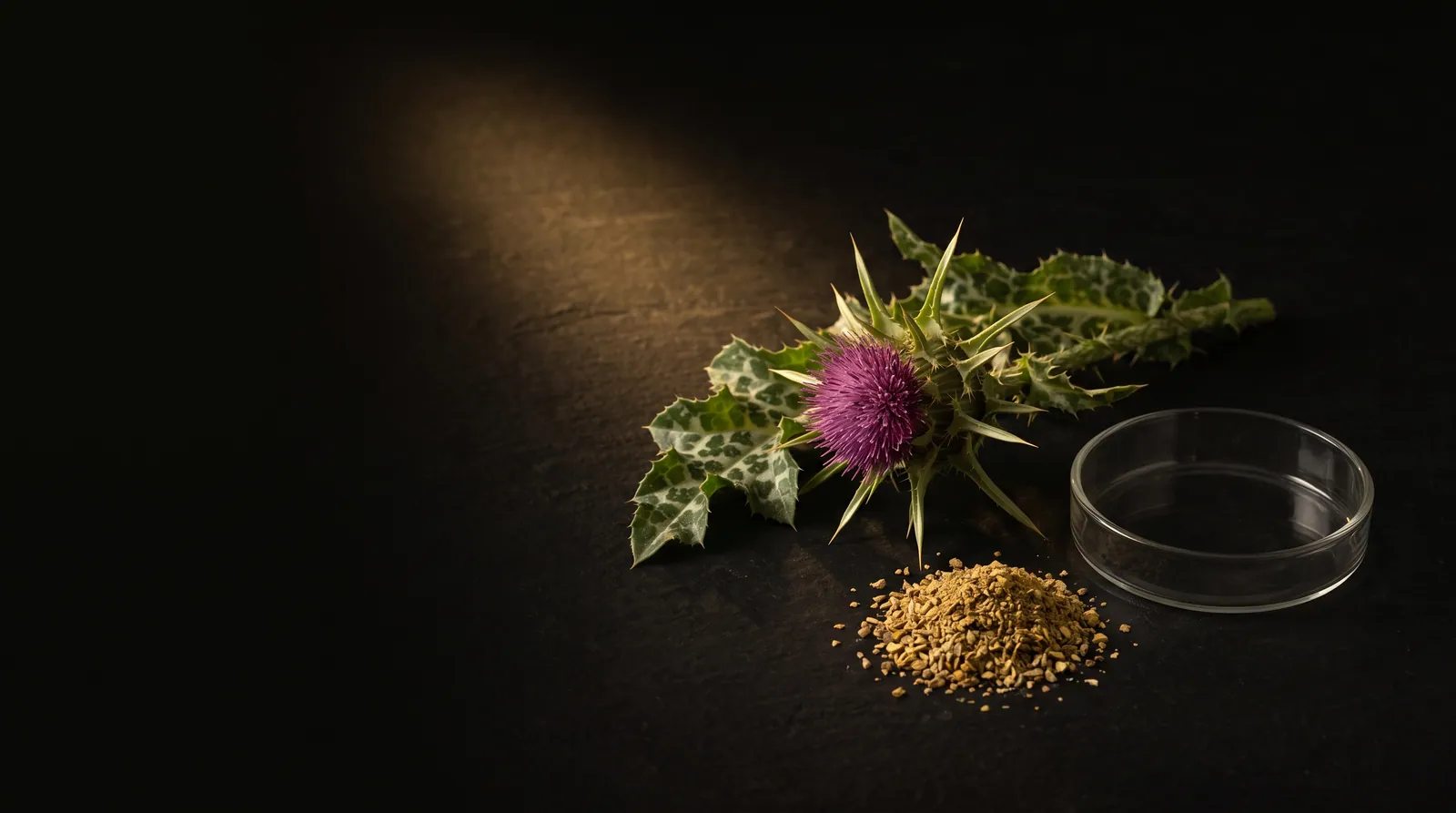
Burnet saxifrage
Pimpinella saxifraga
Mechanism
The root of the lesser burnet saxifrage (Pimpinella saxifraga) contains saponins, essential oil (incl. pinenes) and mucilage. Saponins are associated with an expectorant (mucus-loosening) action, traditionally for irritated states of the upper airways and cough. Robust equine endpoint studies are lacking; its use is empirical and extrapolated from human phytotherapy.
Cautions
- · Essential oil — keep dosing moderate, caution in stomach-sensitive horses
- · Use sparingly during pregnancy (essential-oil/saponin-containing, equine data lacking)
- · Photosensitisation from Apiaceae constituents cannot be ruled out — observe under sun exposure
- · With persistent cough, clarify airway diagnostics (equine asthma)
Sources
Frequently asked questions
Is Burnet saxifrage a feed or a veterinary medicine for horses?
Equiterna classes Burnet saxifrage as “Complementary feed”. Legal framework: Regulation (EU) 2019/6 / TAMG (DE/AT), Feed Regulation (EC) 767/2009.
Is Burnet saxifrage allowed at FEI competitions?
In the profile, Burnet saxifrage is listed with the FEI status “Not listed”. The current FEI list is authoritative, so please check its latest version.
Which dosage do the sources give for Burnet saxifrage?
Stated in the profile: approx. 10–20 g dried root/animal/day (large horse), lower in herbal mixtures. This is information from the literature, not an instruction for an individual horse.
Which sources are there for Burnet saxifrage?
The profile cites: Tabanca et al. (J Essent Oil Res 2021) and ESCOP/Kommission E Pimpinellae radix.
Usage note
This content is for information and education. It does not replace veterinary diagnosis or treatment. If your horse shows signs of illness, consult a veterinarian.
“Nothing forced can ever be beautiful.”
Equiterna is an intermediary platform for equine knowledge, marketplace and tools — not a veterinary-medicines dealer, veterinary practice or pharmacy. Compound information is source-attributed (PubMed, specialist journals, NRC/GfE, EU regulations) and free of healing claims. Legal framework: Regulation (EU) 2019/6 / TAMG (DE/AT), Feed Regulation (EC) 767/2009, FEI Prohibited Substances List, HWG.