

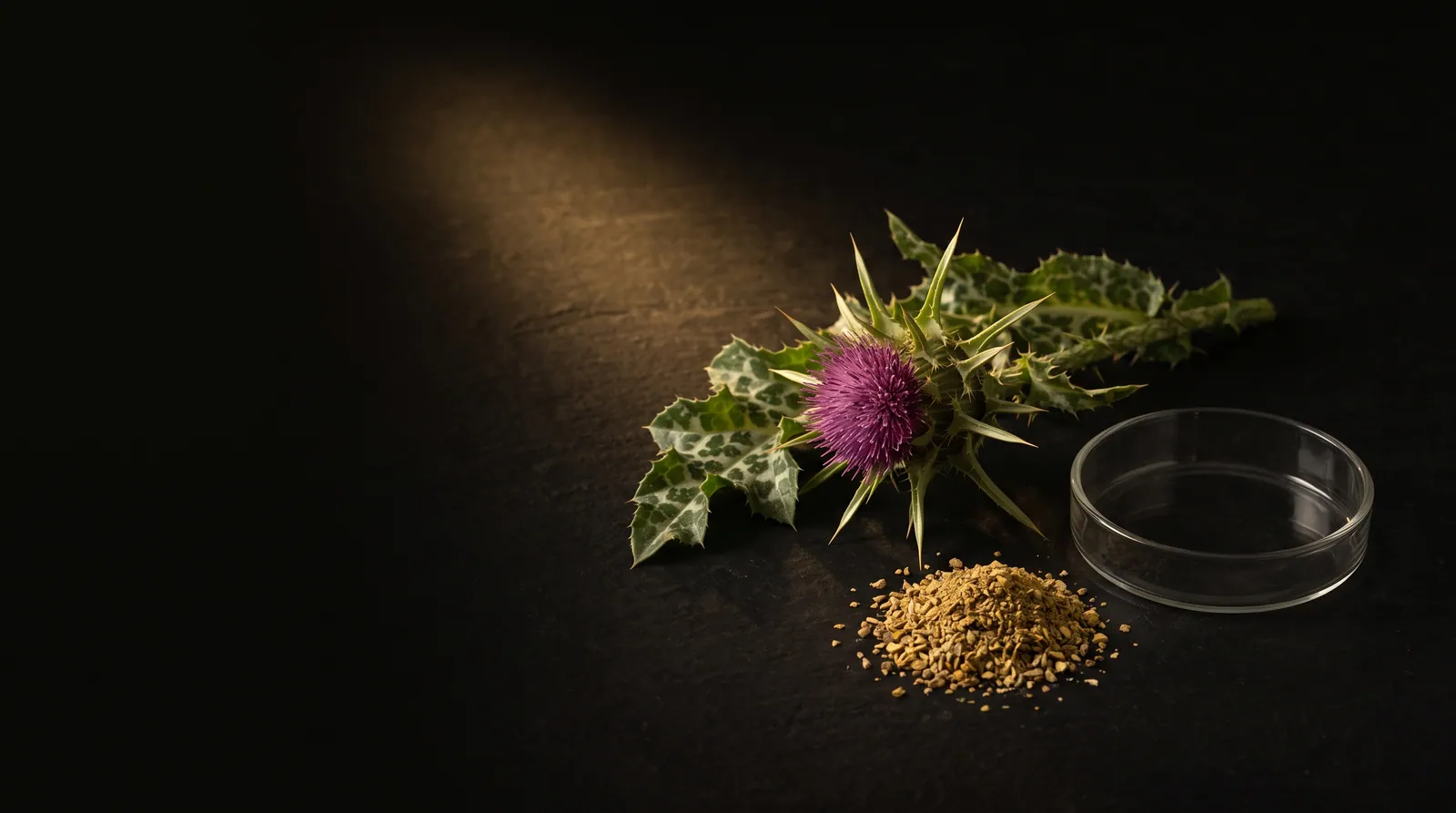
Bai Zhu / Atractylodes
Atractylodes macrocephala · Bai Zhu · White Atractylodes · Atractylodis Macrocephalae Rhizoma
Mechanism
Charakteristische Leitsubstanzen sind die Sesquiterpenlactone Atractylenolid I-III sowie ein aetherisches Oel und immunaktive Polysaccharide (Review Atractylenolide, PMC10224166). Atractylenolide werden antiinflammatorische, motilitaets- und schleimhautbezogene Effekte zugeschrieben; ein Extrakt hemmte in Modellen dosisabhaengig spontane Kolonkontraktionen ueber Interstitialzellen des Cajal und ATP-sensitive K+-Kanaele (PMC12320794), waehrend Polysaccharide in praeklinischen Darmmodellen barriere- und mikrobiomstabilisierend wirkten (PMC12693929). In der TCM gilt Bai Zhu als milzstaerkend/verdauungsstuetzend. Die Datenlage ist praeklinisch (Zell-, Nager-, Ex-vivo-Gewebe); kontrollierte Wirksamkeits-, Sicherheits- oder PK-Studien beim Pferd fehlen vollstaendig. Der Einsatz als Ergaenzungsfuttermittel ist traditionell/extrapoliert zu bewerten, ohne therapeutischen Anspruch am Tier. Aetherisch-oelige Anteile koennen bei Empfindlichen die Schleimhaeute reizen.
Cautions
- · Aetherische Oele/Sesquiterpenlactone: bei Empfindlichen Schleimhautreizung oder Verdauungsverstimmung moeglich
- · Beeinflussung der Darmmotilitaet in Modellen beschrieben - Vorsicht bei GI-Grunderkrankungen
- · Keine equinen Daten - nur als Ergaenzungsfuttermittel, kein Krankheitsbezug
- · Tragende/laktierende Stuten: mangels equiner Daten meiden
- · FEI: allgemeine Kraeuterprodukt-Warnung - vor Wettkampf abklaeren
Sources
Usage note
This content is for information and education. It does not replace veterinary diagnosis or treatment. If your horse shows signs of illness, consult a veterinarian.
“Nothing forced can ever be beautiful.”
Equiterna is an intermediary platform for equine knowledge, marketplace and tools — not a veterinary-medicines dealer, veterinary practice or pharmacy. Compound information is study-attributed and free of healing claims. Legal framework: Regulation (EU) 2019/6 / TAMG (DE/AT), Feed Regulation (EC) 767/2009, FEI Prohibited Substances List, HWG.