

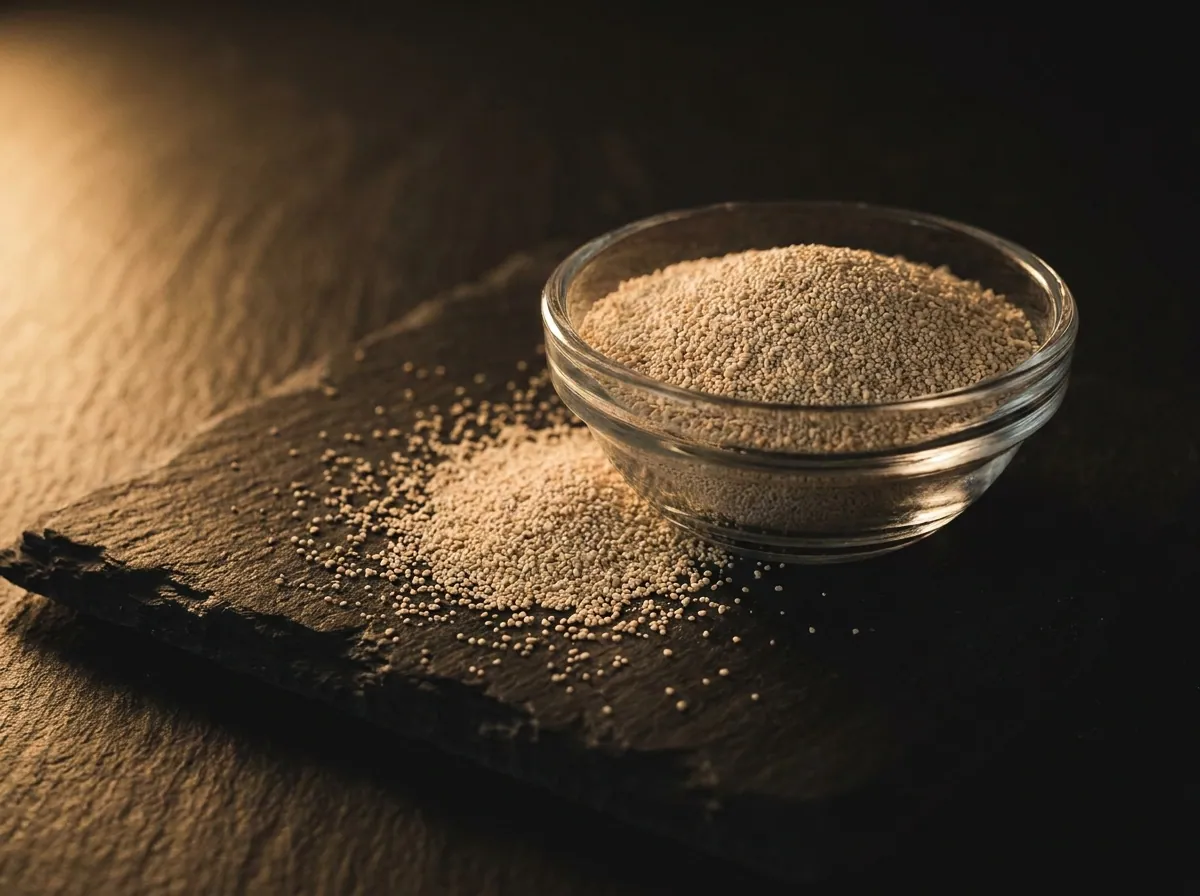
Bacillus subtilis
spore-forming probiotic
Mechanism
Bacillus subtilis forms resistant spores and is thereby gastric-acid, temperature and storage stable, so that viable germs can reach the large intestine. A stabilization of the gut flora and support of fiber digestion is discussed, for example during ration changes. The effect is strongly strain-specific — results of one strain cannot be transferred to others. Individual B. subtilis strains are assessed and authorized on the EU side as zootechnical additives (gut flora stabilizers), predominantly however for other livestock species; robust equine efficacy data are limited.
Cautions
- · Effect strongly strain-specific — only assess demonstrated strains
- · Only use EU/EFSA-assessed and authorized feed strains (VO (EG) 1831/2003)
Sources
Frequently asked questions
Is Bacillus subtilis a feed or a veterinary medicine for horses?
Equiterna classes Bacillus subtilis as “Complementary feed”. Legal framework: Regulation (EU) 2019/6 / TAMG (DE/AT), Feed Regulation (EC) 767/2009.
Is Bacillus subtilis allowed at FEI competitions?
In the profile, Bacillus subtilis is listed with the FEI status “Not listed”. The current FEI list is authoritative, so please check its latest version.
Which dosage do the sources give for Bacillus subtilis?
Stated in the profile: product-specific (CFU/day according to the authorization of the respective strain). This is information from the literature, not an instruction for an individual horse.
Which sources are there for Bacillus subtilis?
The profile cites: EFSA Journal 2018;16(1):5220, EFSA QPS, and PMID:36552396.
Usage note
This content is for information and education. It does not replace veterinary diagnosis or treatment. If your horse shows signs of illness, consult a veterinarian.
“Nothing forced can ever be beautiful.”
Equiterna is an intermediary platform for equine knowledge, marketplace and tools — not a veterinary-medicines dealer, veterinary practice or pharmacy. Compound information is source-attributed (PubMed, specialist journals, NRC/GfE, EU regulations) and free of healing claims. Legal framework: Regulation (EU) 2019/6 / TAMG (DE/AT), Feed Regulation (EC) 767/2009, FEI Prohibited Substances List, HWG.