

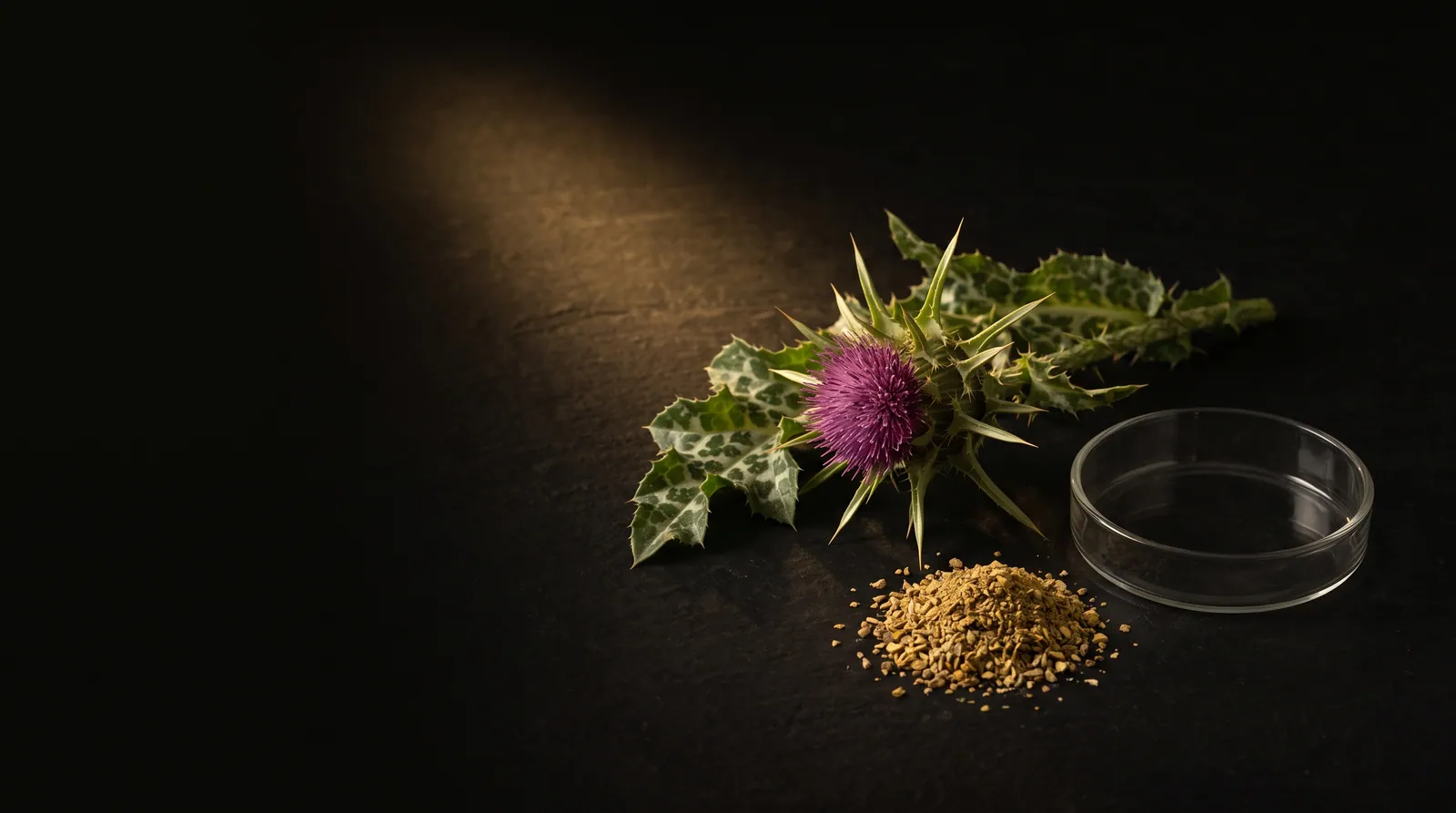
Artischockenblatt
Cynara scolymus L. · Cynara cardunculus var. scolymus · Artischocke · Globe Artichoke Leaf
Mechanism
Wirkbestimmend im Blatt sind Caffeoylchinasaeure-Derivate, insbesondere Cynarin und Chlorogensaeure, sowie Flavonoide wie Luteolin und Sesquiterpenlaktone; ihnen werden choleretische (gallefluss-foerdernde), antioxidative und lipidmodulierende Effekte zugeschrieben (Nutrients 2024, 16(6):872, MDPI-Review). Diskutiert werden eine Anregung der Gallensekretion, Schutz der Hepatozyten vor oxidativem Stress und eine Hemmung der Cholesterin-Biosynthese/LDL-Oxidation. In Humanstudien besserten Artischocken-Blattextrakte Leberenzyme (ALT/AST) bei nicht-alkoholischer Steatohepatitis gegenueber Placebo (Panahi et al. 2018, PMC4879230). Kontrollierte equine Wirksamkeitsstudien fehlen; die Einordnung erfolgt aus Human- und Nagerdaten und wird hier offen als Extrapolation benannt. Einordnung: Ergaenzungsfuttermittel im Kontext von Leber-/Stoffwechsel-Unterstuetzung, ausdruecklich ohne Heil- oder Behandlungsauslobung an einem erkrankten Tier.
Cautions
- · Kontraindiziert bei Gallengangsverschluss (choleretische Wirkung)
- · Moegliche Kreuzreaktion/Allergie bei Sensibilisierung gegen Korbbluetler (Asteraceae)
- · Bitterstoffe koennen bei empfindlichen Tieren die Magensaeuresekretion steigern
- · Tragende/laktierende Stuten: keine equinen Unbedenklichkeitsdaten
- · Keine kontrollierten equinen Studien - Uebertragung aus Humanmedizin; bei Leberverdacht tieraerztliche Diagnostik statt Selbstmedikation
Sources
Usage note
This content is for information and education. It does not replace veterinary diagnosis or treatment. If your horse shows signs of illness, consult a veterinarian.
“Nothing forced can ever be beautiful.”
Equiterna is an intermediary platform for equine knowledge, marketplace and tools — not a veterinary-medicines dealer, veterinary practice or pharmacy. Compound information is study-attributed and free of healing claims. Legal framework: Regulation (EU) 2019/6 / TAMG (DE/AT), Feed Regulation (EC) 767/2009, FEI Prohibited Substances List, HWG.