

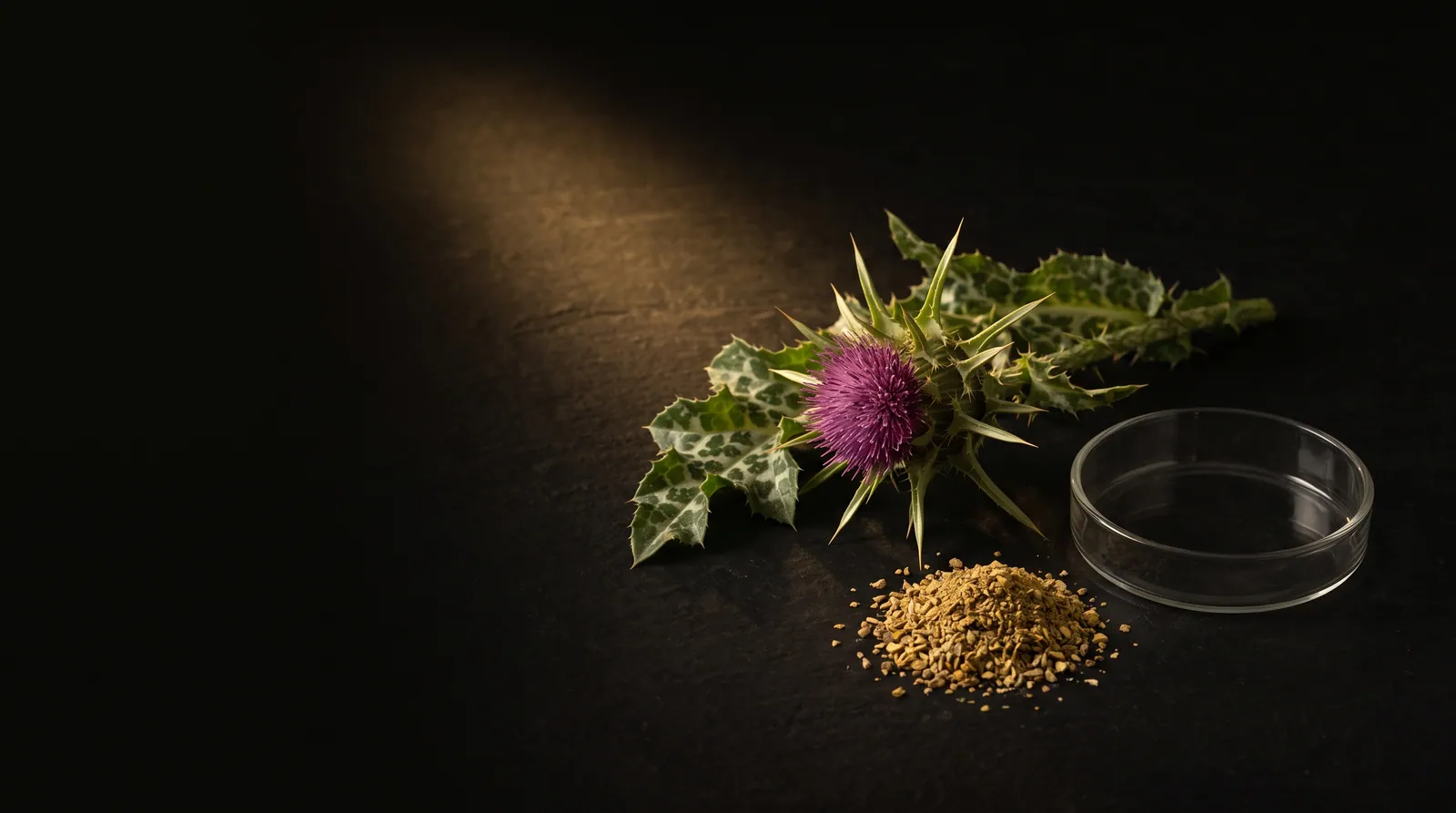
Artichoke
Cynara scolymus · Cynara cardunculus
Mechanism
Artichoke leaves contain caffeoylquinic acids (incl. cynarin), flavonoids and bitter compounds. In animal models an increase in bile flow (choleretic effect) has been shown; antioxidant and liver-metabolism-supporting properties are described. Traditionally artichoke is used to support the liver, bile flow and digestion. Robust equine studies on clinical endpoints are lacking.
Cautions
- · Contraindicated with bile-duct obstruction — veterinary clarification
- · Composite-family (Asteraceae) sensitivity possible
Sources
Products containing Artichoke
Nr. 5 Frühlingserwachen
Dr. Weyrauch
Herbs Leber-Fit
Höveler
E VET heparOforte
Eggersmann
HEPADURE
MASTERHORSE
Bergsiegel Herb Care Hepar
agrobs
Bergsiegel Kräuter für den Stoffwechsel
agrobs
Knowledge connections
Usage note
This content is for information and education. It does not replace veterinary diagnosis or treatment. If your horse shows signs of illness, consult a veterinarian.
“Nothing forced can ever be beautiful.”
Equiterna is an intermediary platform for equine knowledge, marketplace and tools — not a veterinary-medicines dealer, veterinary practice or pharmacy. Compound information is study-attributed and free of healing claims. Legal framework: Regulation (EU) 2019/6 / TAMG (DE/AT), Feed Regulation (EC) 767/2009, FEI Prohibited Substances List, HWG.