

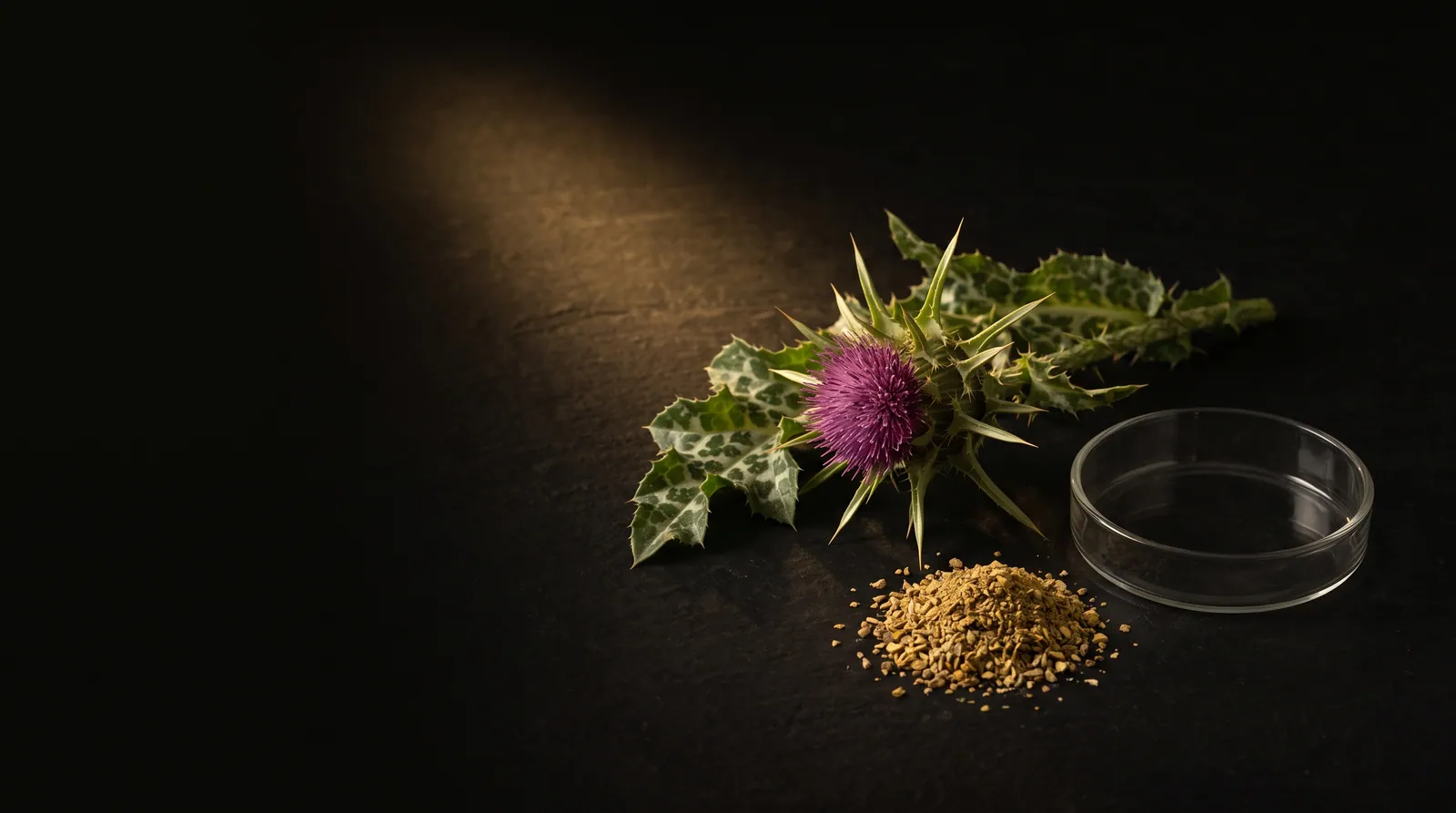
Aloe ferox
Aloe ferox Miller · Aloe capensis · Kap-Aloe · Cape aloe
Mechanism
Kap-Aloe ist der eingedickte, getrocknete Blattsaft (Latex) von Aloe ferox mit sehr hohem Anthranoid-Anteil (Hydroxyanthracen-Derivate ~18-33%, v. a. Aloin/Barbaloin, 5-Hydroxyaloin A, Aloe-Emodin; EMA- und ESCOP-Monographien Aloe capensis). Die Anthron-C-Glykoside werden im Dickdarm bakteriell zu aktiven Aglykonen umgesetzt, hemmen die Na+/K+-Resorption, erhoehen die luminale Sekretion und stimulieren die propulsive Peristaltik - Wirkung als kraeftiges Stimulanzlaxans (humanmedizinisch nur kurzfristig bei akuter Obstipation, Tagesdosis 20-30 mg Hydroxyanthracene). Aloe ferox gilt als besonders drastisch; beim Dickdarmfermentierer Pferd ist das Risiko von Kolik, waessrigem Durchfall, Dehydratation und Elektrolytentgleisung erheblich. Kontrollierte equine Studien fehlen; eine innerliche Anwendung als Futter ist nicht vertretbar. Einordnung: kein Ergaenzungsfuttermittel, sondern pflanzlicher Wirkstoff mit Arzneimittelcharakter (Laxans) - Anwendung gehoert in tieraerztliche Hand.
Cautions
- · drastisches Stimulanzlaxans - hohes Kolik-, Durchfall-, Dehydratations- und Elektrolytrisiko beim Pferd (aloe-ferox besonders stark)
- · kontraindiziert bei Ileus, Darmobstruktion, Kolikneigung, Dehydratation
- · tragende/laktierende Stuten strikt meiden (uteruswirksam; Uebertritt der Anthrachinone in die Milch)
- · nicht als Dauergabe - Hypokaliaemie, Kolonschaedigung; Anthrachinone (Aloe-Emodin) genotoxisch diskutiert (EMA)
- · Aloin/Anthrachinone: als Laxans und potenziell leistungsbeeinflussend einzuordnen - Wettkampf meiden
Sources
Usage note
This content is for information and education. It does not replace veterinary diagnosis or treatment. If your horse shows signs of illness, consult a veterinarian.
“Nothing forced can ever be beautiful.”
Equiterna is an intermediary platform for equine knowledge, marketplace and tools — not a veterinary-medicines dealer, veterinary practice or pharmacy. Compound information is study-attributed and free of healing claims. Legal framework: Regulation (EU) 2019/6 / TAMG (DE/AT), Feed Regulation (EC) 767/2009, FEI Prohibited Substances List, HWG.