Western
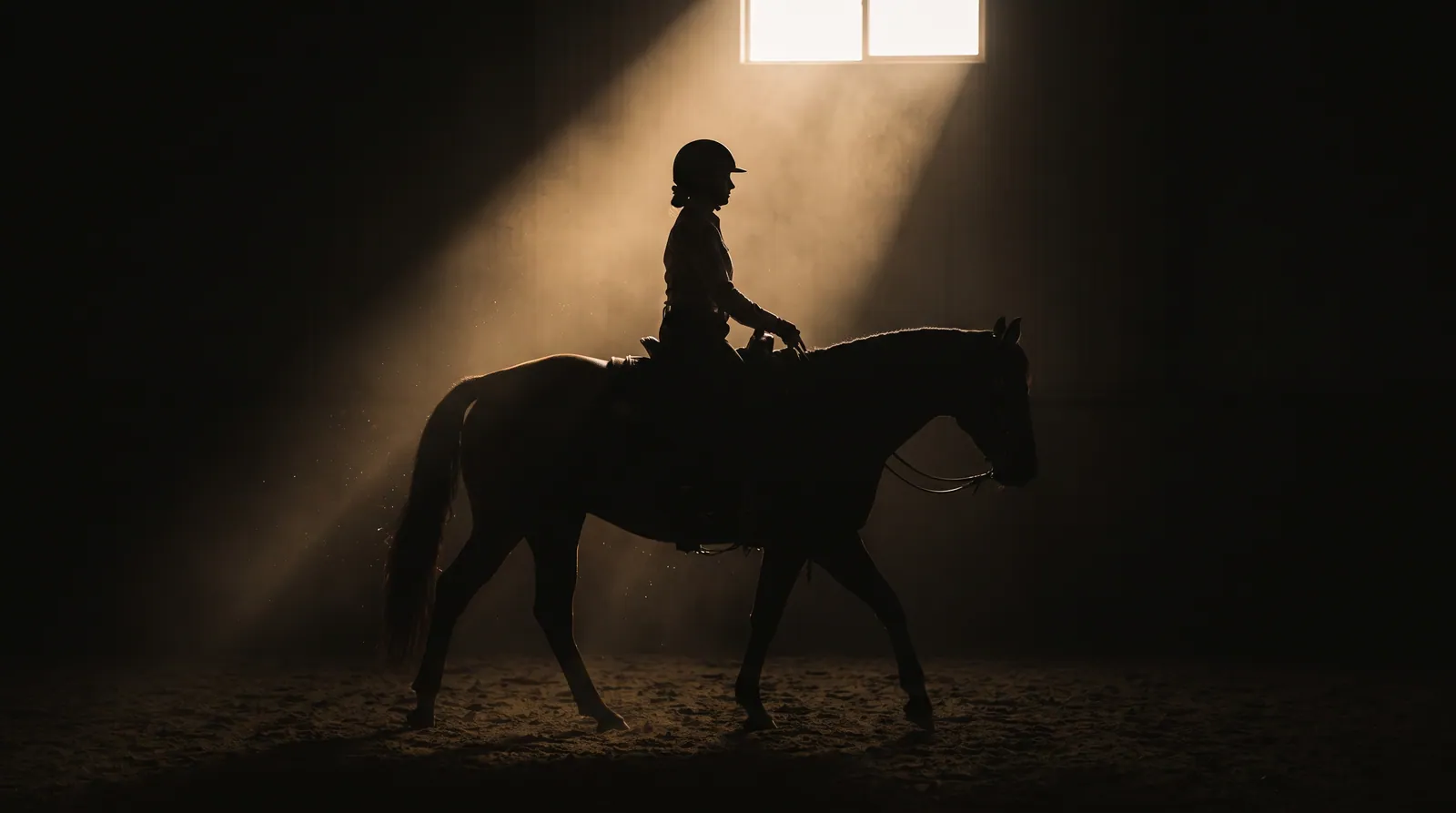
Reining, trail, ranch — soft feel and calmness from working riding.
The bond across all riding styles: animal welfare and biomechanics — method-neutral, no ranking.
Western riding emerged from the daily work on the cattle ranches of North America, where the horse had to be reliable, agile and manageable over many hours with minimal aids on a loose rein. From this functionality independent disciplines developed -- Reining, Cutting, Working Cowhorse, Trail and Pleasure -- as well as a remarkably refined doctrine of aids that educates the horse to think along in self-carriage. A hallmark of this school is the ideal of the 'broke horse', which goes on a loose rein in self-carriage and balance, as well as a bridling tradition refined over generations (Bosal to Spade Bit). As everywhere, the hand and level of training of the rider are decisive; sharp leverage bits, however, demand regardless of that a very fine, schooled hand and are discussed controversially in animal-welfare terms.
Vaquero & Cowboy
Working Ranch Tradition
Spanish horsemanship meets cattle work in North America. Practice shapes everything: a horse that carries, turns and thinks along on a loose rein all day. Function before form.
Bosal to Spade Bit
Californian Bridling Tradition
The long path of bridling: begin bitless in the Bosal, lead through the Two-Rein phase, and only the fully trained horse comes into the Spade Bit. The Spade Bit is intended as a signal giver for the fully trained horse, not as a means of coercion -- in improper use, however, it carries a considerable risk of pain and injury.
AQHA
American Quarter Horse Association
Founding of the studbook of the agile, powerful ranch horse breed. It forms the organizational and breeding backbone of modern Western sport.
Cutting & Working Cowhorse
From Work to Sport
Separating a cow from the herd becomes its own discipline; the Working Cowhorse combines cattle work with a precise pattern. The innate 'cow sense' is cultivated.
NRHA
National Reining Horse Association
Reining is codified: spins, sliding stops and flying changes in fixed patterns. FEI-recognized from 2000 to 2021 -- the first Western format on the international stage; in 2021 the FEI removed Reining from its canon of disciplines again after differences with the NRHA.
Trail & Western Pleasure
Composure as Discipline
Trail tests ability and steadiness of nerve at obstacles, Pleasure the comfort of the gaits. In part Pleasure came under criticism (unnaturally low head carriage) -- rulebooks have since counteracted this.
Ranch Riding & Versatility
Return to the Work
As a countermovement to the forms of Pleasure perceived as too extreme, Ranch Riding establishes itself: forward, natural gaits, light contact, the functional working horse as the ideal. Animal welfare and authenticity move to the foreground.
Self-carriage on a loose rein -- the 'broke horse' carries itself without constant rein guidance. Biomechanically the same goal as the self-carriage of the classical school, only with markedly reduced use of the hand.
Neck Rein and weight aids before rein hand -- steering is primarily through seat, leg and laying the rein against the neck; the hand is the last resort. This corresponds to the classical primacy of weight and leg aids.
Rollback and Spin as bending of the haunches -- the lightning-fast turn over the hindquarters and the rotation around the inside hind leg demand load-bearing and collection; the same principle as pirouette and bending of the haunches, born of cattle work.
Sliding Stop out of the jumped-through halt -- the sliding stop succeeds only over a stepping-under, lowered hindquarter pelvis with a relaxed back; done correctly it is an expression of high load-bearing, trained incorrectly a strain on the hock joints.
'Soft feel' as low-pressure dialogue -- the willing yielding to the faintest signals is the Western language for suppleness and fine contact; collection arises as a result of training, not as a forced form.